
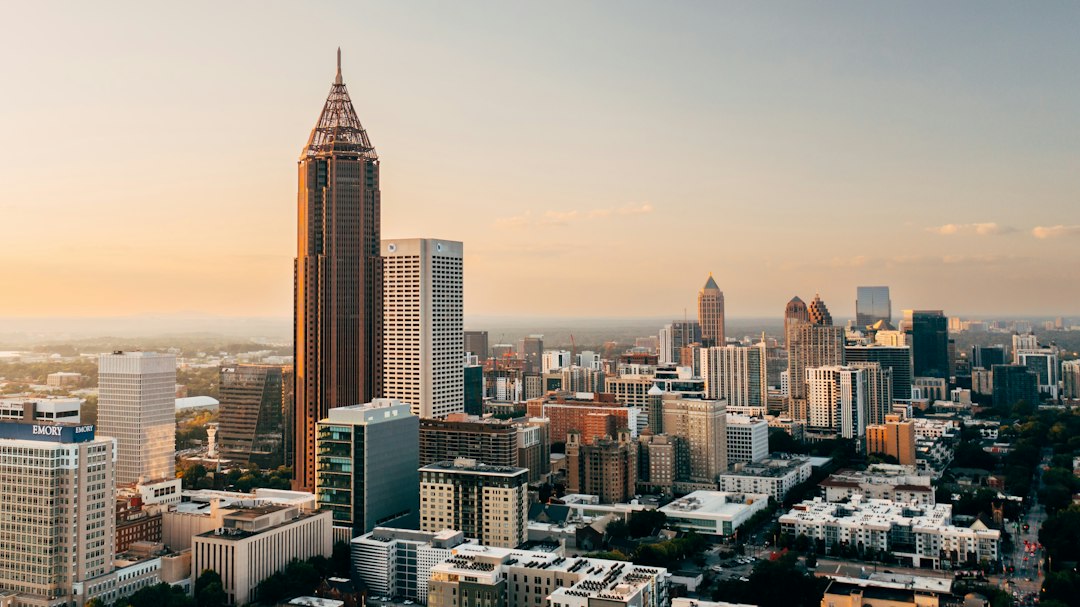
Atlanta is the South's window on the world, and the view back through that window is the subject of a new report from PBS carrying a blunt headline: "Even after the midterm rout of Trumpism, the world struggles to trust America."
The framing is itself the story. The report's premise — distributed through Google News' World feed — rests on two propositions that deserve to be read together rather than separately. The first is that the midterm elections amounted to a repudiation of Trumpism at the ballot box. The second is that the repudiation, however decisive, has not been enough to repair how the United States is perceived abroad.
AtlantaStar reviewed the report as syndicated; the full text remains with PBS, and this account does not extend beyond the characterization that syndication carries. That characterization is worth taking seriously on its own terms, because it describes a political problem that is specific, measurable and — for the party now absorbing the loss — structural.
**The electoral half of the equation**
For Georgia voters, the idea that Trump-aligned politics carries a built-in electoral discount is not a new theory imported from a national desk. It is the recent record. In 2020, Georgia went to a Democratic presidential nominee for the first time since 1992. In the January 2021 runoffs, the state sent two Democrats, Raphael Warnock and Jon Ossoff, to the U.S. Senate. In 2022, Georgia split its ticket in a way that political scientists have been citing ever since: Gov. Brian Kemp won reelection comfortably, while Herschel Walker — the candidate recruited and endorsed by Donald Trump — lost the Senate runoff on the same electoral map. Same state, same voters, same month. The difference was the candidate.
That is the candidate-quality problem in its cleanest form, and it is the reason a "rout" framing lands differently in Georgia than it might elsewhere. Republicans here have repeatedly demonstrated they can win statewide. What they have struggled to do is win statewide with nominees selected primarily for loyalty to Trump. The PBS report's premise suggests that dynamic was not confined to one cycle or one state.
**The half that Atlanta feels directly**
The report's harder claim — that trust abroad has not recovered — is where the local stakes become concrete rather than rhetorical.
Atlanta's economy is unusually exposed to how foreign governments, investors and travelers read American reliability. Hartsfield-Jackson Atlanta International Airport is one of the busiest in the world and the hub of a global carrier. Coca-Cola, Delta Air Lines, UPS and Home Depot run worldwide operations from here. The Centers for Disease Control and Prevention anchors an international public-health network from Clifton Road. Emory and Georgia Tech recruit researchers and students from every continent. The city hosts one of the largest consular corps in the United States, and the Carter Center has spent decades building the kind of credibility that is cheap to spend and expensive to rebuild.
Georgia has also been among the largest beneficiaries of foreign direct investment in the Southeast, particularly from South Korean manufacturers in electric vehicles and batteries. Those decisions are made on decade-long horizons. They price in whether American trade policy, immigration processing and diplomatic commitments will look the same after the next election as they do before it.
That is the asymmetry the PBS framing identifies. An election can change who holds power in two years. It cannot, by itself, persuade a foreign ministry or a corporate board that American policy has stopped oscillating. Credibility is restored on a slower clock than it is lost.
For Georgia Republicans, the report describes a bill arriving in two installments. The first is electoral: a coalition that has now repeatedly rejected Trump-aligned nominees in competitive statewide races. The second is economic, and it lands hardest on the metro region that depends most on being trusted — Atlanta.