
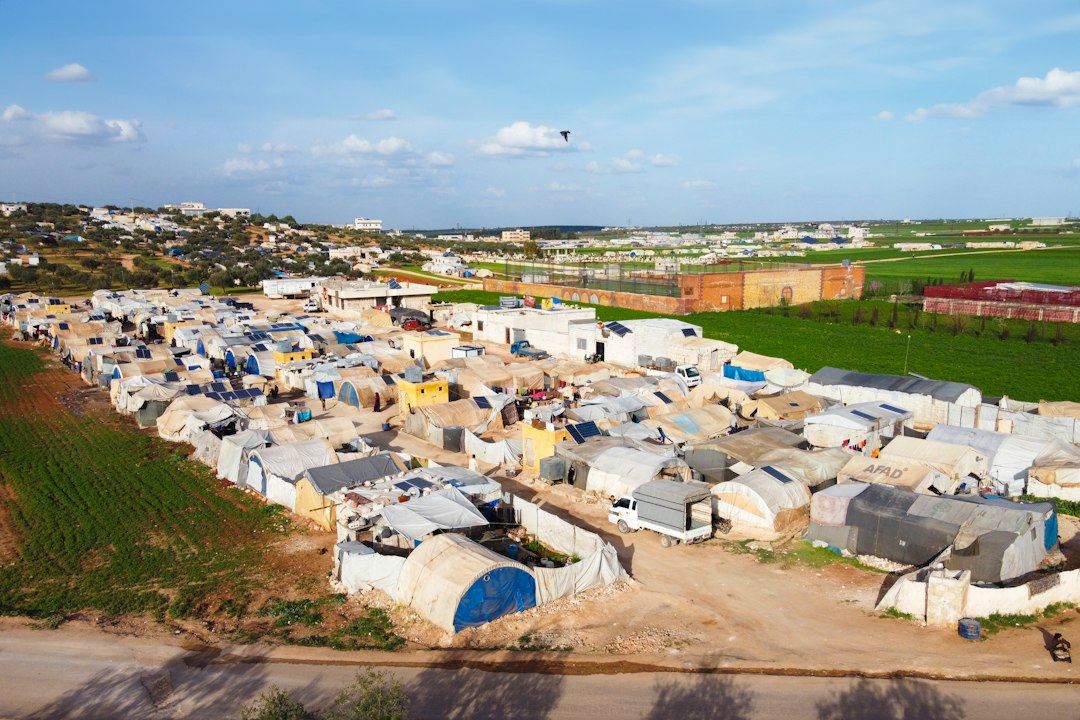
United Nations officials have issued a fresh warning that the forced displacement of Palestinians in Gaza is becoming a deepening "nightmare," according to a report by the Turkish news agency Anadolu Ajansı, with UN voices raising explicit concerns that the pattern of population movement amounts to ethnic cleansing.
The warning adds to a long accumulation of UN statements on Gaza, where repeated waves of evacuation orders, military operations and the destruction of housing have pushed much of the territory's population into shrinking areas of land. UN agencies have consistently described conditions in those areas as unfit for sustained human habitation, citing shortages of shelter, clean water, sanitation and medical care.
AtlantaStar is reporting the UN warning as relayed by Anadolu Ajansı. The specific figures, named officials and full text of the UN statements appear in the original report, linked below; readers seeking the precise wording of the UN's assessment should consult it directly.
**Why the language matters**
The phrase "ethnic cleansing" carries weight in international legal debate because of what sits beneath it. Article 49 of the Fourth Geneva Convention prohibits the individual or mass forcible transfer and deportation of protected persons out of occupied territory, with narrow exceptions for temporary evacuations required by the security of the population or imperative military reasons — evacuations that must be reversed as soon as hostilities in the area end. The Rome Statute of the International Criminal Court lists deportation or forcible transfer of population among the acts that can constitute a crime against humanity when committed as part of a widespread or systematic attack on civilians.
"Ethnic cleansing" is not itself a standalone offense named in a treaty. UN bodies have historically used it to describe conduct that, when broken into its component acts, implicates those existing prohibitions. When UN officials reach for the term, in other words, they are signaling that displacement is not being read as an incidental consequence of fighting but as an outcome with a pattern to it.
**The Atlanta connection**
Atlanta has an unusual density of institutions built around exactly this question. The Martin Luther King Jr. National Historical Park and the King Center anchor a city whose global reputation rests on the moral vocabulary of nonviolent resistance and the claim that human rights are indivisible. The Carter Center, founded by the late former President Jimmy Carter, has spent decades monitoring elections and conflicts and has engaged directly, and at times controversially, with the Israeli-Palestinian question. Emory University and Georgia State University host both scholars of international law and student bodies that have been among the more vocal in the Southeast on Gaza.
Georgia's political institutions are implicated more concretely. Members of the state's congressional delegation vote on foreign assistance, arms transfers and oversight measures that shape the American posture toward Israel's conduct in Gaza — the policy lever most directly available to Atlanta constituents. And Georgia remains one of the states with a law on its books, enacted in 2016, requiring certain state contractors to certify that they are not engaged in a boycott of Israel. That statute has drawn First Amendment litigation, making Georgia a venue where the domestic speech dimensions of the conflict have been argued in federal court.
For Atlanta's Palestinian, Arab and Muslim communities, the UN's warnings are not abstract. Families here have spent two years tracking relatives through evacuation zones by intermittent phone signal. Local mosques, churches and mutual aid networks have organized relief fundraising and advocacy throughout.
**What accountability would require**
UN warnings carry no enforcement power. Accountability mechanisms that exist on paper — the International Criminal Court, the International Court of Justice, universal jurisdiction prosecutions in national courts — all depend on political will from member states, including the United States. That is the gap that human rights organizations have repeatedly identified: documentation has not been the limiting factor; consequences have.
AtlantaStar will continue following developments in Gaza and the occupied Palestinian territories, with attention to the international legal framework and to the Georgia institutions and officials whose decisions touch it.
*Originally reported by Google News — Gaza.*