
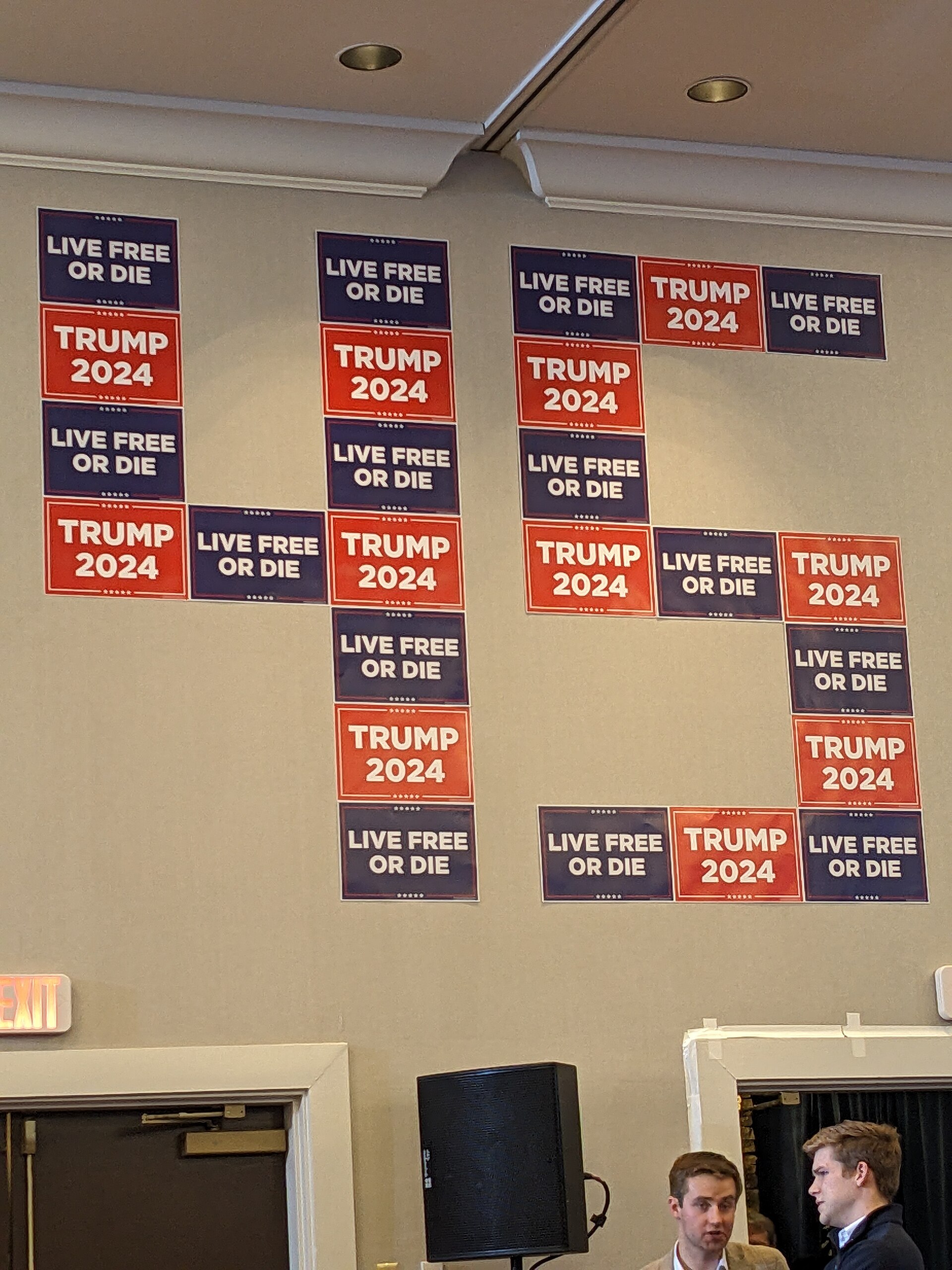
President Donald Trump's streak of primary endorsement victories has come to an end in Iowa, according to a report by Reuters — a setback that hands Democrats fresh ammunition heading into a midterm cycle they increasingly believe will favor them.
For much of the current campaign season, Trump's backing in Republican primaries had functioned as something close to a guarantee. His endorsed candidates rolled through contested races, reinforcing the narrative that the president remains the unrivaled gatekeeper of the GOP nomination process. The Iowa result breaks that pattern, marking the first time in the streak that a Trump-endorsed candidate has fallen short in a primary.
While the specifics of the race remain limited in early wire reporting, the symbolic weight of the outcome is hard to overstate. Endorsement streaks are a currency of political power, and their interruption tends to invite questions about whether a leader's grip is loosening — particularly in a state like Iowa, whose first-in-the-nation traditions give its results an outsized place in the national conversation.
For Atlanta readers, the Iowa stumble lands at a moment when Georgia's own political map is again poised to be a national battleground. The state has delivered some of the narrowest, most closely watched margins in recent American elections, and its suburbs — the rapidly diversifying counties ringing metro Atlanta — have become a proving ground for whether the Republican coalition can hold. A signal that Trump-aligned candidates are no longer invincible in primaries, even in a reliably conservative state, is the kind of development Georgia strategists in both parties study carefully.
The end of the endorsement streak feeds a broader storyline that Democrats have been eager to advance: that Republicans head into the 2026 midterms carrying real vulnerabilities. Party operatives have repeatedly pointed to questions of candidate quality in primary contests, arguing that Trump-endorsed contenders who thrive in low-turnout nominating fights can struggle to broaden their appeal in general elections. An Iowa loss, however it unfolded, offers Democrats a data point to press that case.
There is precedent for the concern. In prior cycles, several high-profile, Trump-backed nominees who emerged from competitive primaries went on to underperform in November, contributing to disappointing Republican showings even in environments that otherwise favored the party out of power. Democratic analysts contend that pattern reflects a structural tension within the modern GOP: the qualities that win a primary are not always the qualities that win a swing electorate.
That tension is especially relevant in Georgia, where statewide races are routinely decided by a point or two and where turnout among Atlanta-area voters, Black voters, and young voters can swing the result. Democrats here have built their recent competitiveness on organizing those constituencies, and they argue that nominees defined primarily by loyalty to Trump give them a clearer contrast to run against.
Republicans, for their part, have long cautioned against reading too much into any single primary. A streak ending is not the same as a movement collapsing, and Trump's influence over the GOP base remains formidable. One Iowa result does not, on its own, rewrite the electoral fundamentals of 2026.
Still, the political class tends to treat moments like this as tea leaves. For a party that has tied its fortunes so closely to a single figure, evidence that his endorsement no longer carries automatic weight is the sort of development that shapes how candidates campaign, how donors invest, and how voters perceive momentum.
As the midterm season accelerates, Georgia will once again be near the center of it. Whether the Iowa result proves to be an isolated stumble or an early indicator of a tougher year for Republicans is a question that will be answered, in part, in the suburbs and cities of the state Atlantans call home.
Originally reported by Google News — Reuters.