
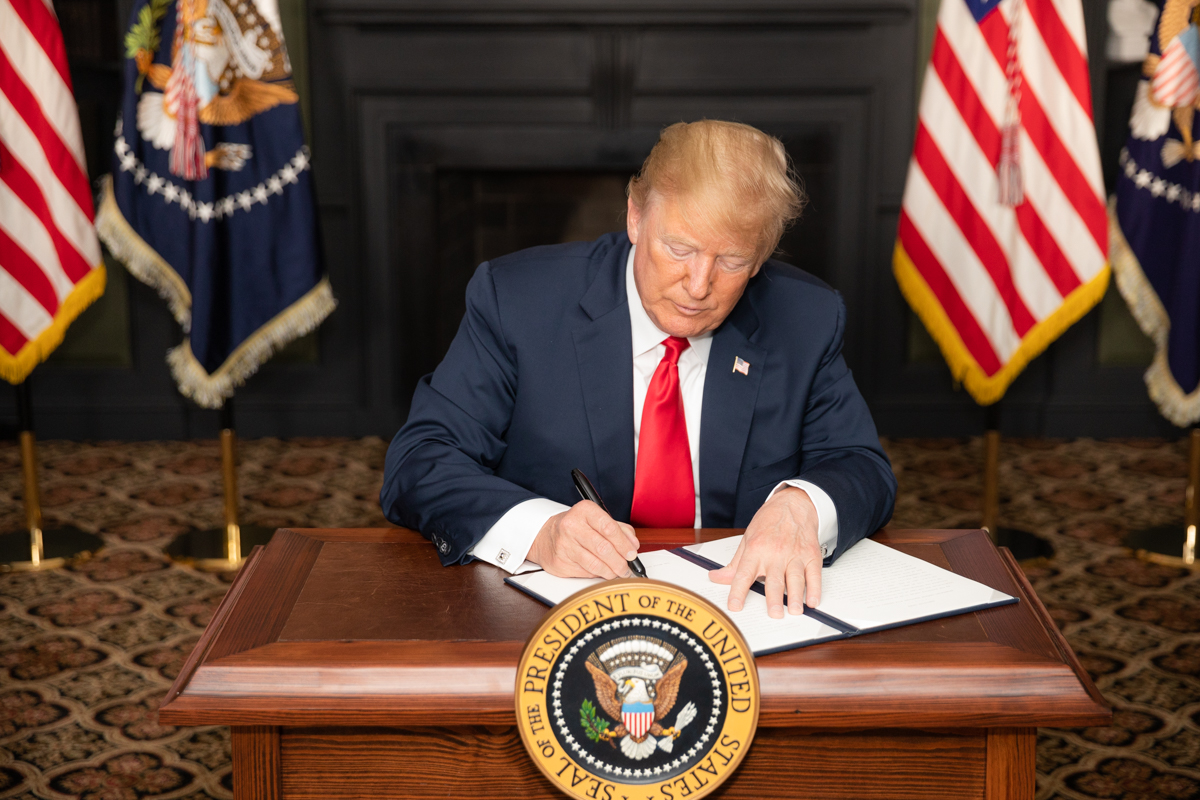
A new report from Reuters finds that President Donald Trump's recent deal with Iran is landing poorly with a slice of the electorate, and that the dissatisfaction has fueled fears among some Republicans that the issue could hurt the party in the upcoming midterm elections.
According to the Reuters reporting, the agreement has fallen short of the expectations of certain voters — the kind of base discontent that party strategists watch closely in an election year. While administrations often tout foreign-policy agreements as wins, the report indicates that for some of the constituencies in question, this deal has not delivered what they hoped, and that gap between promise and perception is now a source of political anxiety on the right.
Reuters frames the concern in midterm terms: some Republicans worry the deal could cost the party seats. Midterm elections, historically, tend to punish the party that holds the White House, and even modest erosion among a president's own supporters can prove decisive in tight races. The Reuters story situates the Iran agreement within that broader vulnerability.
For Atlanta and Georgia readers, the stakes are anything but abstract. Over the last several cycles, Georgia has moved from a reliably red state to one of the nation's most closely contested battlegrounds, with statewide races repeatedly decided by narrow margins. Metro Atlanta — the state's largest population center and its fastest-growing, most diverse region — has been at the center of that shift. When national reporting points to soft support inside the Republican coalition, Georgia is precisely the kind of place where that softness can change outcomes.
That dynamic gives the Reuters findings particular resonance here. In a state where turnout and enthusiasm among each party's base often determine the winner, any sign that a foreign-policy decision is dampening Republican voters' enthusiasm is the sort of detail that campaign operatives on both sides will be studying. Democrats have built their recent Georgia gains on a coalition of metro Atlanta suburbs, younger voters, and high turnout in the city's core; Republicans have leaned on rural and exurban strength and on keeping their own voters motivated. A deal that leaves some of those motivated voters dissatisfied, as Reuters describes, complicates that math.
It is worth emphasizing what the source does and does not establish. The Reuters report identifies dissatisfaction among some voters and concern among some Republicans — it is a snapshot of sentiment, not a prediction. How that sentiment translates to the ballot box, in Georgia or anywhere else, will depend on candidates, turnout, and the many issues voters weigh when they vote.
Still, for a state where elections are routinely decided at the margins, the report adds to a growing body of political analysis suggesting Republicans face real headwinds heading into the midterms. Atlanta voters, who have grown accustomed to being courted as some of the most pivotal in the country, are likely to hear a great deal more about it before November.
Originally reported by Google News — Reuters.