
President Donald Trump will raise the idea of cutting nuclear arsenals with Russian President Vladimir Putin and Chinese President Xi Jinping on Thursday, the White House said, according to Reuters.
The announcement lands at a moment when the legal architecture that capped the American and Russian strategic arsenals for most of the past half-century has run out. New START, signed in 2010, limited each country to 1,550 deployed strategic warheads and gave each side on-site inspection rights. Russia suspended its participation in 2023, and the treaty reached its expiration date in February of this year. For the first time in decades, the two largest nuclear powers face no binding ceiling on their deployed strategic forces.
Folding China into that conversation would be a larger leap still. Beijing has never been a party to the bilateral limits Washington and Moscow negotiated, has consistently declined invitations to join them, and maintains an arsenal that remains considerably smaller than either rival's even as it grows. Arms control specialists have long treated a trilateral framework as a goal with no agreed-upon starting point.
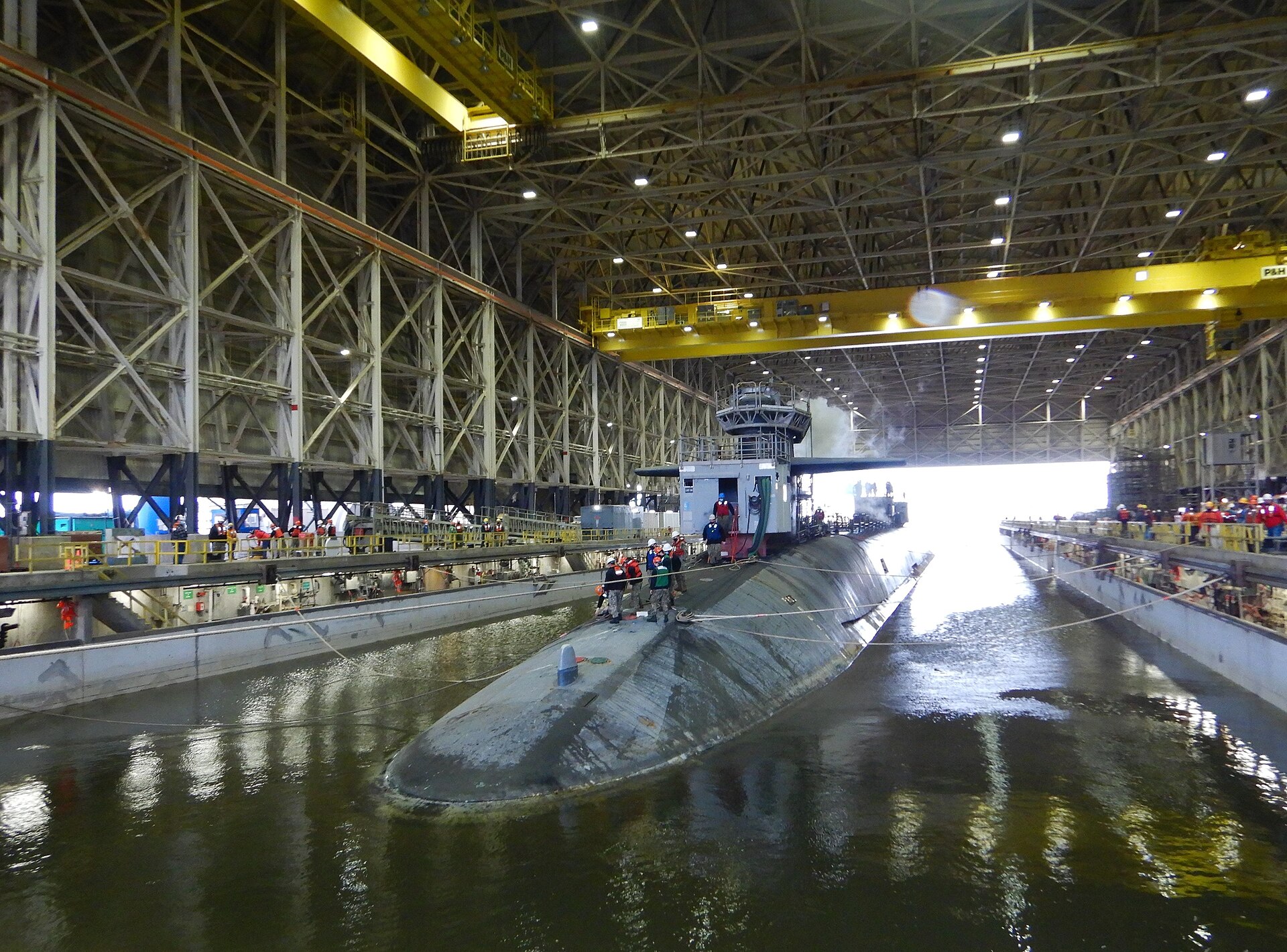
For Georgia, the stakes are not abstract. Naval Submarine Base Kings Bay, on the coast in Camden County roughly 300 miles southeast of Atlanta, is the Atlantic homeport for the Navy's Ohio-class ballistic missile submarines — the most survivable leg of the American nuclear triad and one of the largest military employers in the state. Any negotiated reduction in deployed warheads or launchers would eventually be written into the operating tempo, staffing and budget lines of a base that anchors a corner of Georgia's economy.
Kings Bay has also been a focal point for Georgia's peace movement. In April 2018, seven Catholic activists cut through a fence at the installation to protest nuclear weapons. The group, which became known as the Kings Bay Plowshares 7, was convicted in federal court in 2019 and sentenced the following year, drawing sustained attention from faith communities in Atlanta and across the state.
The city holds a particular claim on arms control history as well. Jimmy Carter, Georgia's only president, signed the SALT II agreement with Soviet leader Leonid Brezhnev in Vienna in 1979 — a deal the Senate never ratified after the Soviet invasion of Afghanistan, but one whose limits both sides broadly observed for years afterward. The Carter Center, which he founded in Atlanta, has spent decades arguing that direct negotiation with adversaries is preferable to the alternative.
That history is also a reminder of what makes a proposal real: verification. SALT II, New START and the treaties in between were judged less on the warhead numbers they announced than on the inspections, data exchanges and monitoring they required. Numbers without verification have historically been worth little.
Scrutiny of this particular negotiation will be sharper than most. The U.S. intelligence community concluded in January 2017 that Russia conducted an influence campaign targeting the 2016 presidential election, and that Putin ordered it with the aim of aiding Trump — a finding that a Republican-led Senate Intelligence Committee affirmed in its bipartisan, five-volume review. Special Counsel Robert Mueller's 2019 report did not establish that the Trump campaign conspired or coordinated with the Russian government. Together, those documents form the public record that critics and allies alike will read against whatever emerges from Thursday.
Beyond the stated intention to raise the subject, little was publicly known about the shape of what Trump will propose. No framework, timeline, verification regime or negotiating venue had been described. Whether Thursday produces the opening of a process or a single conversation is the question Georgia's congressional delegation, the workforce at Kings Bay and the state's arms control advocates will be weighing.
Originally reported by Google News — Reuters.