
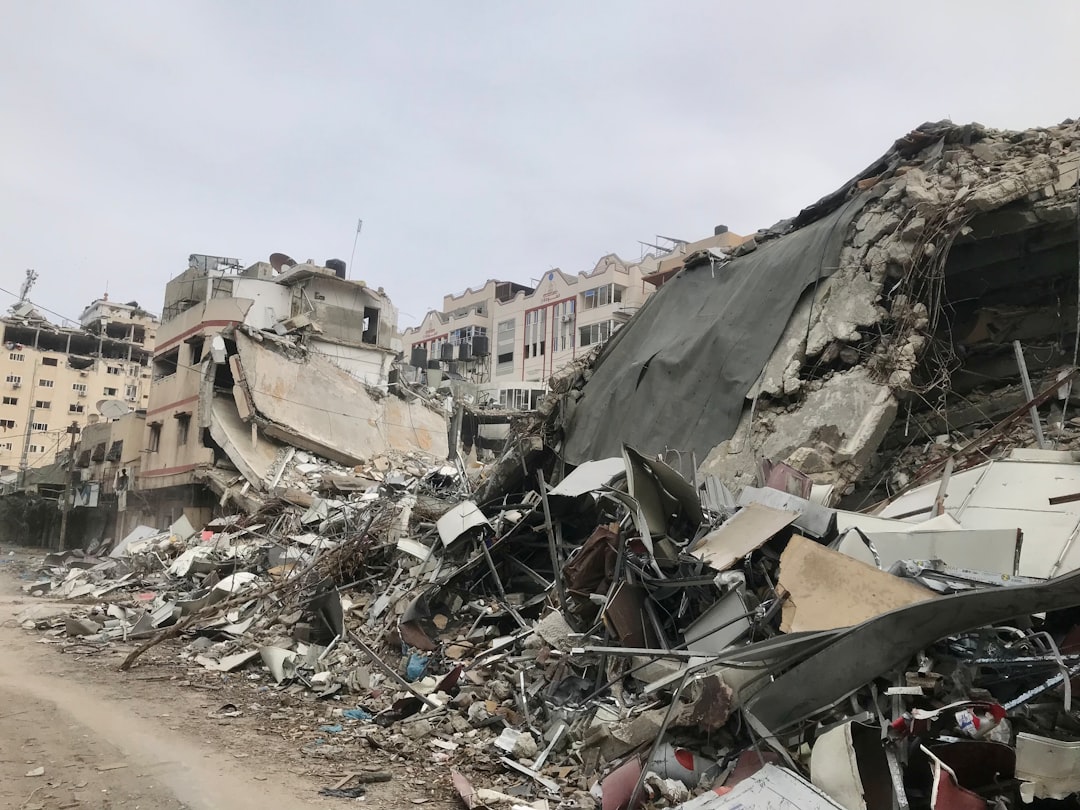
A new report describes Gaza as gripped by a "plague" of rats, with rodents "terrorising" a population already enduring one of the most severe humanitarian emergencies of recent memory. The account, published by The Week, points to a public-health catastrophe unfolding in the shadow of the broader war — one rooted in the collapse of the basic systems that keep disease at bay.
For readers in Atlanta, a city that knows how quickly a public-health story can become a question of justice and government responsibility, the dynamics are familiar even if the scale is not. When sanitation fails — when garbage goes uncollected, when water and sewage infrastructure stops functioning, when displaced families are packed into shelters without services — vermin follow. In Gaza, where humanitarian organizations have repeatedly warned that waste management, clean water access, and medical care have been pushed to the brink, the conditions that allow rodent populations to explode are precisely the conditions that prolonged conflict and blockade have created.
The significance of an infestation like this is not merely one of discomfort. Rodents are vectors for disease, and a surge in their numbers is a symptom of an environment in which the ordinary machinery of urban life — trash trucks, functioning sewers, pest control, public utilities — has broken down. Human rights organizations including the United Nations, Amnesty International, and Human Rights Watch have documented how the destruction of civilian infrastructure and restrictions on aid have left Gaza's residents exposed to cascading health risks. A visible plague of rats is the kind of detail that makes an abstract humanitarian warning concrete.
Under international humanitarian law, parties to a conflict bear obligations toward the civilian population, including duties not to deprive civilians of objects indispensable to their survival — among them drinking water and sanitation facilities. Legal scholars and rights advocates have argued that the degradation of these essentials in Gaza raises serious accountability questions. When the systems that protect public health are dismantled or rendered inoperable, the consequences fall hardest on the most vulnerable: children, the elderly, the sick, and the displaced.
The imagery of rodents overrunning neighborhoods carries a particular weight in the historical memory of wartime suffering. Infestations of this kind have long accompanied sieges and the breakdown of civil order, and they have long served as a marker of how far a civilian population has been pushed. That the story is being reported at all underscores how the human cost of the war extends well beyond the immediate violence — into the slow, grinding harms of disease, contamination, and environmental collapse.
The details available in the original report are limited, and AtlantaStar has not independently verified the scope of the infestation. But the underlying conditions it describes are consistent with what humanitarian monitors have warned about for months: a civilian population cut off from the services that sustain ordinary life, and a public-health emergency layered on top of an already devastating war.
For an Atlanta readership accustomed to debates over equitable access to clean water, functioning utilities, and public health as fundamental rights, the report is a reminder of what is at stake when those systems vanish entirely. The rats are not the crisis. They are evidence of it — a visible sign of infrastructure destroyed, services denied, and a population left to contend with the aftermath.
Accountability for the conditions that produce such suffering, advocates argue, will ultimately rest on documentation: the patient work of journalists, rights monitors, and primary-source witnesses recording what is happening on the ground. This report adds one more entry to that record.
Originally reported by Google News — World.