
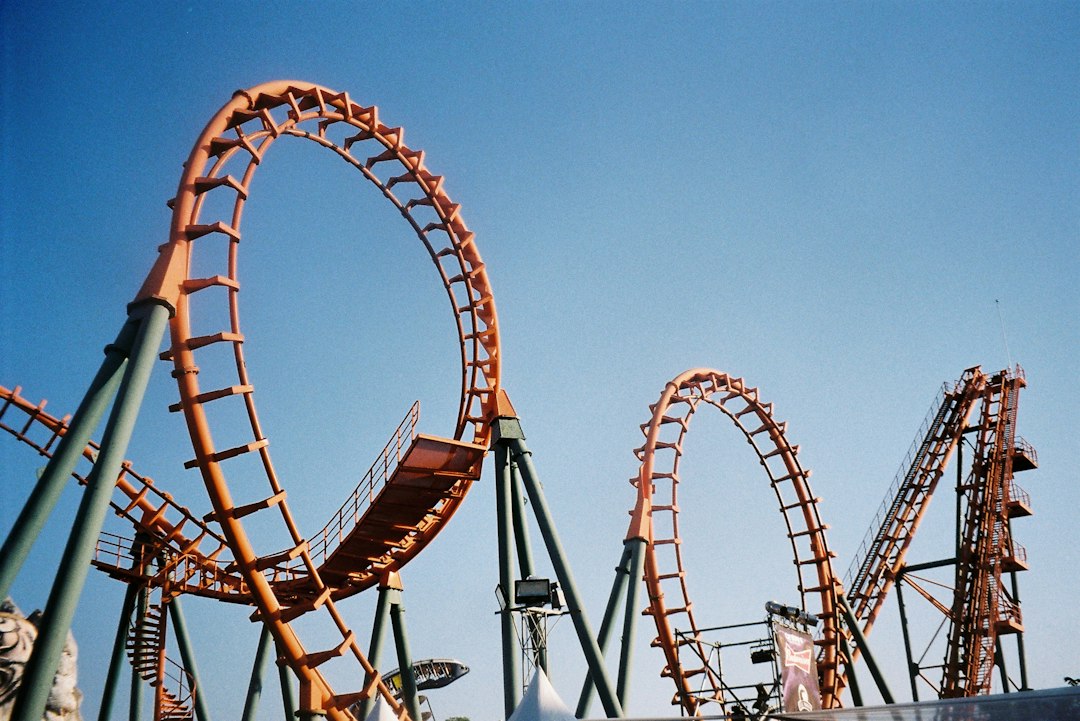
Six Flags will reopen its Goliath rollercoaster with seatbelts added to the ride's restraint system, the company has indicated following the recent death of a rider, according to reporting by The Guardian.
The decision marks a rare public retrofit of a major thrill ride by one of the country's largest amusement park operators, and it arrives at a moment when parents, season-pass holders and regulators alike are asking what safety assurances the industry owes the public. For readers in metro Atlanta, the news carries added weight: Six Flags Over Georgia, in Austell just west of the city line in Cobb County, operates its own coaster named Goliath, one of the park's signature attractions and a fixture of summer for generations of Atlanta-area families.
The available report does not specify which park's ride was involved in the fatality, and AtlantaStar is not drawing a connection between the incident and the Austell attraction. What the report does establish is the operator's response: the ride is slated to return to service, and it will do so with a restraint configuration that differs from the one in place when the death occurred. The addition of seatbelts as a secondary restraint is a common engineering approach on high-speed coasters, layering a redundant mechanical backstop behind the primary lap bar or over-the-shoulder harness.
That detail is likely to drive the public conversation in the days ahead. A retrofit can be read two ways — as a responsible operator moving quickly to add redundancy, or as an acknowledgment that the prior configuration left a gap. The company has not, in the reporting available, offered a detailed technical explanation of the change, and no findings from any investigation have been made public. Until that record exists, the reopening will be judged largely on trust.
In Georgia, amusement ride oversight does not rest with the parks alone. State inspectors are responsible for permitting and periodically examining amusement rides operating in Georgia, and operators are generally required to report serious incidents to state authorities. That framework means a safety modification adopted at one Six Flags property can ripple outward, since large chains typically standardize restraint changes across identical or similar ride models rather than applying them park by park.
The stakes for Cobb County are not abstract. Six Flags Over Georgia is one of the largest seasonal employers in the area, drawing hundreds of thousands of visitors annually and feeding a web of hospitality and service jobs along the I-20 corridor. Public confidence in ride safety is, in a direct sense, economic infrastructure for that corner of the metro region.
It is also a question of equity. Amusement parks are among the few large-scale recreational spaces in the region accessible to working-class and middle-income families who cannot afford a week at the coast or a destination resort. When safety standards slip at a regional park, the people who bear the risk are disproportionately the families with the fewest alternatives — a dynamic that should sharpen, not soften, the expectation of transparency from operators and state regulators.
AtlantaStar will continue following the story, including whether Georgia regulators seek any review of the Austell park's Goliath and whether Six Flags extends the seatbelt retrofit chain-wide. Riders and families with questions about a specific attraction should direct them to the park and to state ride-safety officials.
Originally reported by Google News — World.