
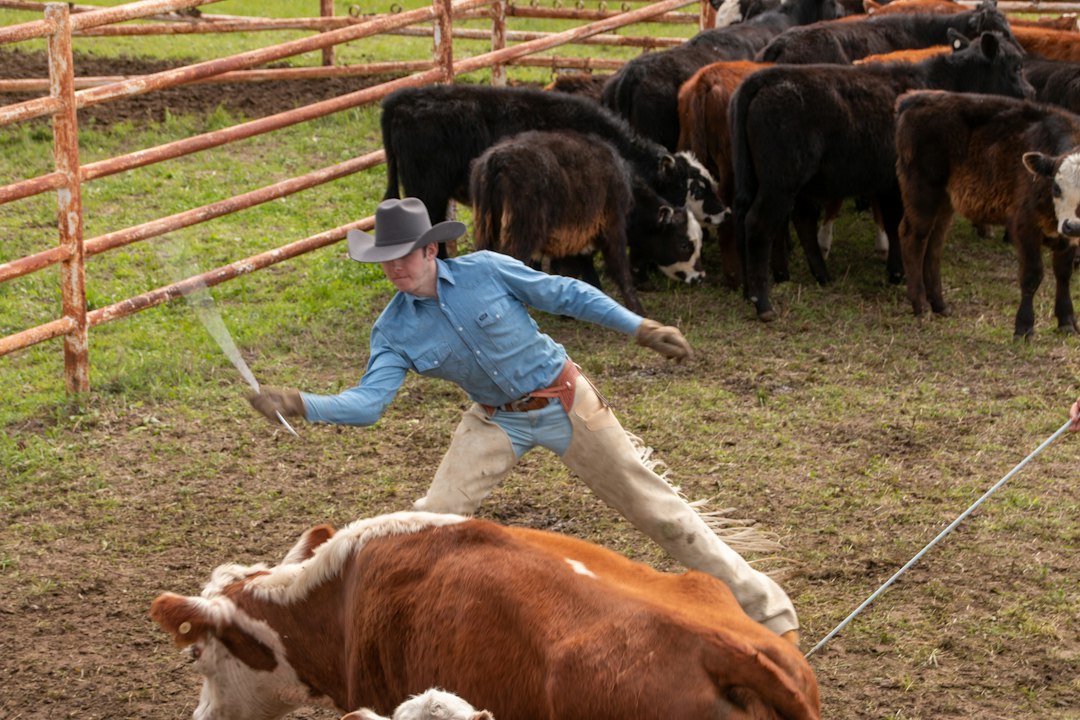
A livestock crossing on the U.S. southern border has reopened under a stricter inspection regime designed to block the New World screwworm, a parasitic fly whose larvae feed on the living tissue of animals and, in rare cases, people. The reopening, reported this week, resumes a flow of animal traffic that had been halted as federal animal-health officials weighed the risk of the pest moving north.
The decision matters far from the Rio Grande. Georgia is a cattle state — one with tens of thousands of farms and a beef sector concentrated in the middle and southern counties, within a few hours' drive of Atlanta's distribution hubs. When federal regulators shut down or reopen cattle imports, the ripple reaches Georgia feedlots, Fulton County meat processors and, eventually, the price tags at Kroger and Publix.
Screwworm is not an abstract threat in the American South. The pest was endemic across the region for much of the 20th century, inflicting heavy losses on Southern livestock before a decades-long eradication campaign — built on the mass release of sterilized male flies — pushed it out of the United States and eventually into a containment zone in Central America. Georgia ranchers were among the beneficiaries of that campaign, and the state's animal-health infrastructure has operated for generations on the assumption that the fly stays south.
That assumption has been under pressure as screwworm detections have moved northward through Central America and Mexico in recent years, prompting U.S. officials to suspend livestock imports at southern ports of entry. The reopening of a crossing, paired with tighter checks rather than a simple return to prior rules, reflects the balance regulators are trying to strike: keeping the cross-border cattle trade functioning while adding layers of inspection and treatment meant to catch infested animals before they travel farther into the country.
The details of the enhanced screening were not specified in the original report, and federal agencies have not published a full description of the new protocol in the account on which this story is based. What the reopening signals is a shift in posture — from closure as a blunt instrument to managed access with heavier scrutiny.
For progressive readers in Atlanta, the story sits at an intersection the city knows well. The Centers for Disease Control and Prevention, headquartered on Clifton Road, is the nation's reference point for zoonotic disease — illnesses that cross from animals to humans. Human screwworm infestation, known as myiasis, is uncommon and treatable but deeply unpleasant, and cases in travelers returning from affected regions are the kind of event that lands on CDC desks. Atlanta is also home to a concentration of global-health researchers whose work on vector-borne pests has long depended on stable federal funding and staffing — resources that have faced repeated pressure in recent budget cycles.
There is a labor and equity dimension, too. Border inspection regimes are enforced by federal veterinarians and inspectors whose ranks have thinned in some districts, and the burden of compliance often falls on small producers and cross-border haulers with the least capacity to absorb delays. A tighter checkpoint that works depends on people being paid to staff it.
Georgia's Department of Agriculture and University of Georgia extension veterinarians have historically served as the state's early-warning network for livestock pests, advising producers to report unexplained wounds and larvae in cattle, horses, pets and wildlife. That reporting chain — rancher to extension agent to state to federal — is the mechanism that would detect a screwworm case in Georgia, and it works only if producers know to look.
For now, the pest remains outside U.S. borders, and a single crossing is moving animals again under heavier guard. Whether that proves sufficient will be measured not in policy announcements but in the absence of a detection — in Texas, and eventually in Georgia.
Originally reported by Google News — World.