
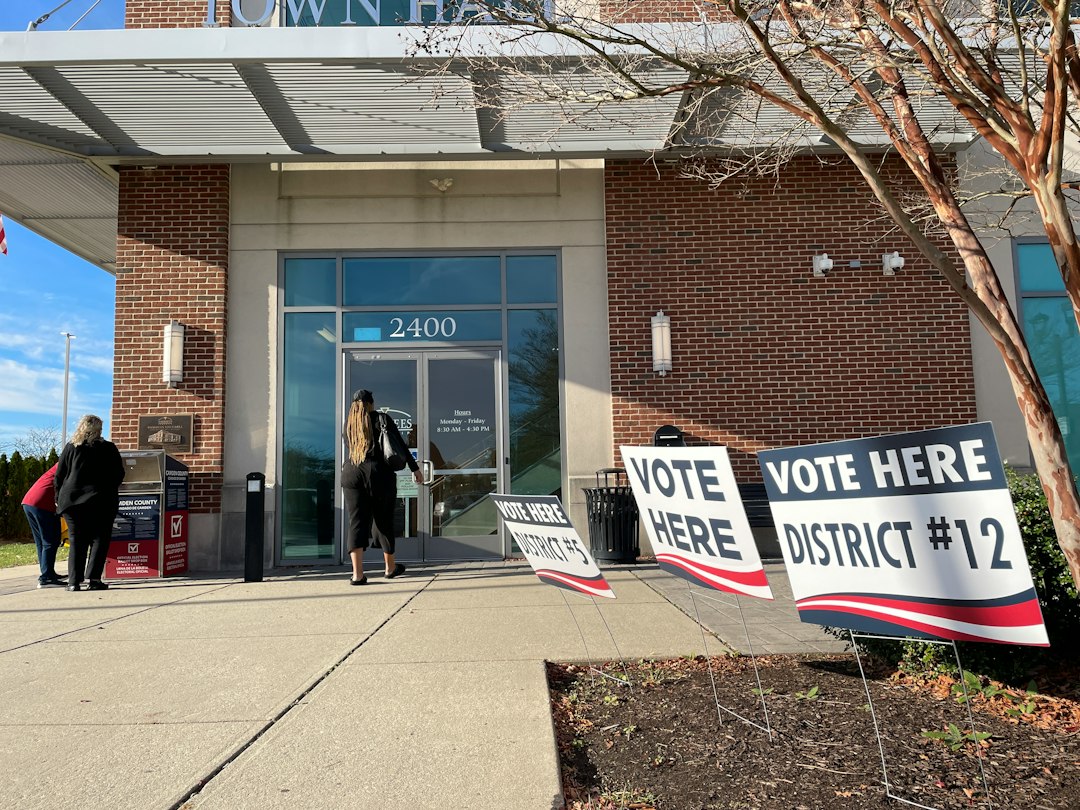
A rise in Black voter turnout has helped drive historic change in Georgia and transformed the state's government, according to a report published by News From The States.
The finding places the center of Georgia's political realignment squarely where metro Atlanta residents have long understood it to be: in the counties ringing the city, which hold the state's largest concentration of Black voters. Fulton, DeKalb, Clayton, Gwinnett, Cobb, Henry and Rockdale counties have, over the past decade, moved from being a regional bloc that Republicans could absorb to a turnout engine capable of setting statewide outcomes.
The Star is reporting the report's central conclusion as attributed to News From The States; the underlying data tables and methodology were not available to this newsroom at publication. We are not reproducing figures we have not independently reviewed. What the report asserts is the direction of the change and its driver — increased Black participation — and its effect on who holds office and governs in Georgia.
That conclusion, if it holds, has consequences that extend well past a single election cycle, and they fall hardest on Georgia Republicans.
**Why turnout, not persuasion, is the harder problem for the GOP**
There is a meaningful difference between losing voters and losing an electorate. A party that loses persuadable voters can win them back with a better candidate or a repositioned platform. A party facing a structurally larger and more consistent opposing electorate faces a problem that campaign messaging does not solve.
Georgia Republicans have spent most of the last decade managing the first problem while the second one grew underneath them. Their statewide path has depended on running up margins in rural and exurban counties by enough to offset metro Atlanta. That arithmetic works only if metro turnout stays below its ceiling. A durable increase in Black turnout — the kind the report describes — raises the number Republicans must beat in every cycle, including the midterms, when overall participation typically falls and the party out of the White House typically gains ground.
State Republicans have shown they understand the stakes. After Georgia's 2020 results and the January 2021 U.S. Senate runoffs, the Republican-controlled General Assembly passed and Gov. Brian Kemp signed Senate Bill 202, a sweeping rewrite of the state's election procedures that drew national boycotts, federal litigation and sustained opposition from Atlanta's civil rights establishment and much of its business community. The law was a response to the same phenomenon the new report documents.
**The Atlanta angle**
For Atlanta, the report describes a transfer of political weight as much as a change in vote totals. Georgia's government — the Gold Dome, the constitutional offices, the congressional delegation — was built for most of the 20th century on the explicit premise that Atlanta's Black electorate would not determine its composition. A sustained turnout shift inverts that premise.
That shift also raises the pressure on officeholders who now depend on it. Turnout is not automatic. It is the product of organizing infrastructure, registration work, accessible polling places and candidates who give voters a reason to show up. Georgia Democrats inherited an electorate built by that work; they do not own it. The same report that reads as a warning to Republicans reads as an obligation to Democrats, who will be tested in the midterms on whether they can mobilize without a presidential race at the top of the ballot.
For readers in Atlanta, the practical questions are local and immediate: how many precincts will operate in Fulton and DeKalb, how long the lines will be, how absentee rules will be administered, and whether the legislature revisits election law again before voters do. Those administrative details, more than any single candidate, will determine whether the trend the report identifies continues.
*Originally reported by Google News — Georgia Politics.*