
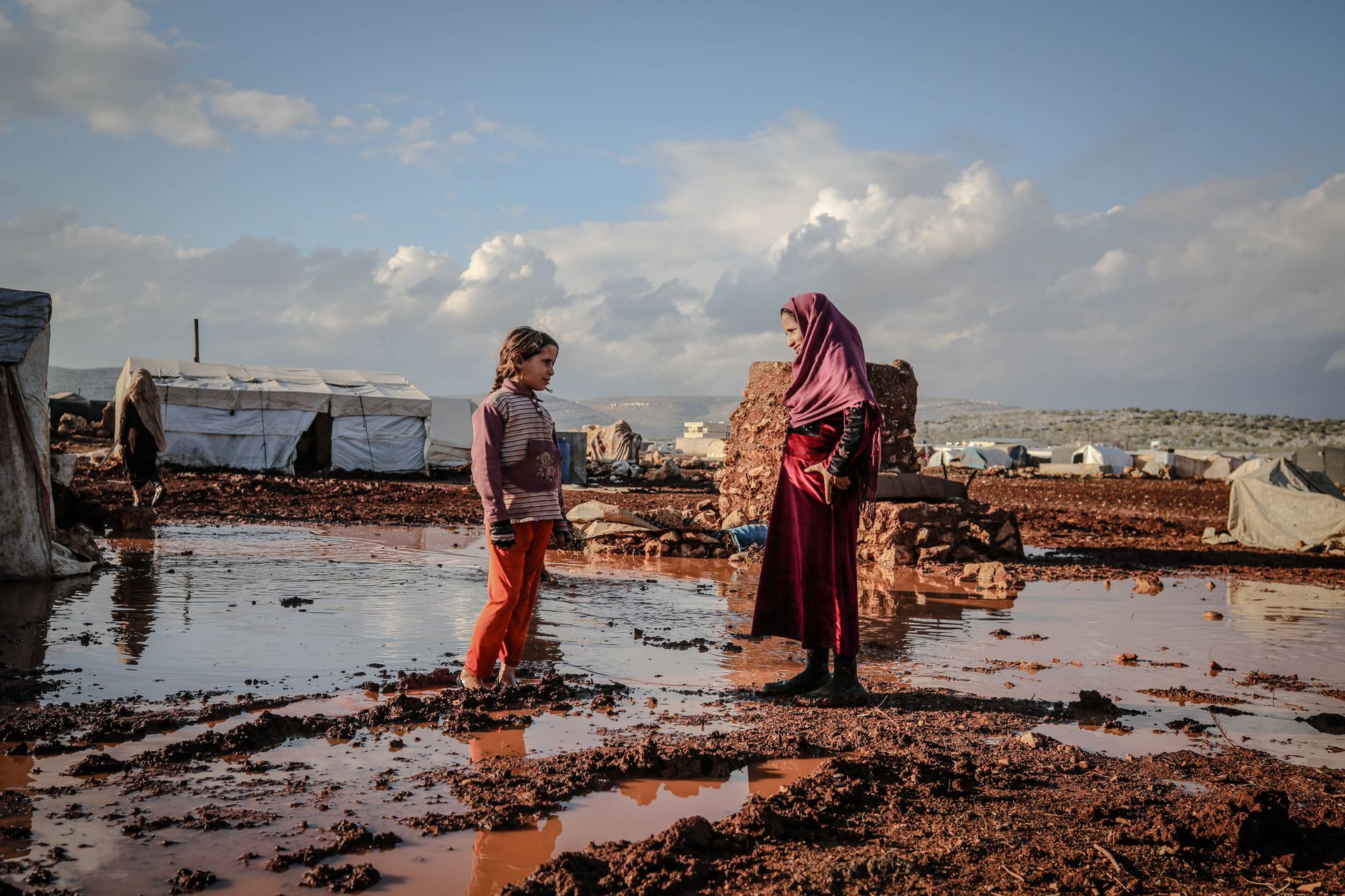
Seasonal rains have flooded displacement camps across the Gaza Strip, soaking the tents and improvised shelters where hundreds of thousands of Palestinians have been living, while Israeli authorities continue to block the entry of shelter materials into the territory, according to reporting by Middle East Eye.
The outlet's account describes a compound emergency rather than a natural disaster: rainfall arriving on ground where the housing stock has been destroyed, and arriving at a moment when the tarpaulins, tents, timber and other materials needed to keep water out are being kept on the other side of a closed crossing. Rain is not a policy. The absence of a tent is.
That distinction matters for how the story is understood here in Atlanta, a city that knows what a few inches of water can do to people who have nowhere dry to go. When storms roll through the metro, the response is a scramble of emergency shelters, church basements and county warming centers — an imperfect system, but one built on the assumption that supplies can reach the people who need them. In Gaza, per Middle East Eye's reporting, that assumption does not hold, because the material cannot get in.
International humanitarian law speaks directly to this situation. Under the Fourth Geneva Convention, an occupying power bears responsibility for ensuring that the civilian population under its control is adequately supplied. Article 59 provides that where a population is inadequately supplied, the occupying power shall agree to relief schemes and shall facilitate them. Shelter sits alongside food, water and medical care in the basic set of needs that relief consignments are meant to address. Human rights organizations have consistently treated obstruction of relief as a legal question, not merely a logistical one — a framing that places the burden of explanation on the authority controlling access.
Atlanta Star is reporting this story from a single secondary source, and the limits of that source should be stated plainly. Middle East Eye's report establishes two things: that rains have flooded displacement camps, and that shelter materials are being blocked from entering Gaza. It does not, in the material available to us, provide verified casualty figures, a geographic breakdown of the worst-affected camps, or a response from Israeli officials. Independent verification inside Gaza remains difficult, in part because of restrictions on international press access to the territory — a constraint that journalism organizations have raised repeatedly throughout the war.
What the reporting does make legible is the structure of the harm. Displacement camps are, by design, temporary. They were never built to survive a winter, and they depend on continuous resupply — replacement sheeting, drainage, ground mats, fuel — to remain survivable at all. Cut the resupply and the camp does not simply stay as it was; it degrades. Standing water in dense encampments carries its own downstream risks, from contaminated drinking water to the spread of disease in populations already weakened by months of shortage. Humanitarian agencies have long described shelter as a protection issue for precisely this reason: it is the thing that keeps every other vulnerability from compounding.
For Atlanta readers, the connection is not abstract. The metro area is home to substantial Palestinian, Arab American and Muslim communities, and local congregations, student groups and relief organizations have organized fundraising and aid drives for Gaza throughout the conflict. Atlanta is also the home of the Carter Center, an institution built on the premise that human rights monitoring and conflict mediation are legitimate instruments of American foreign policy rather than optional gestures. Both facts mean questions about Gaza arrive in this city attached to constituents, donors and congressional offices.
Those questions are narrow and answerable. Which crossings are open, and for what cargo. Which shelter items are classified as restricted, and on what stated grounds. Whether the volume of material entering is sufficient to meet the shelter need before the next rain. Accountability in a case like this does not require resolving the war. It requires an accounting of what was kept out, by whom, and why — while the water was rising.
Originally reported by Google News — Gaza.