
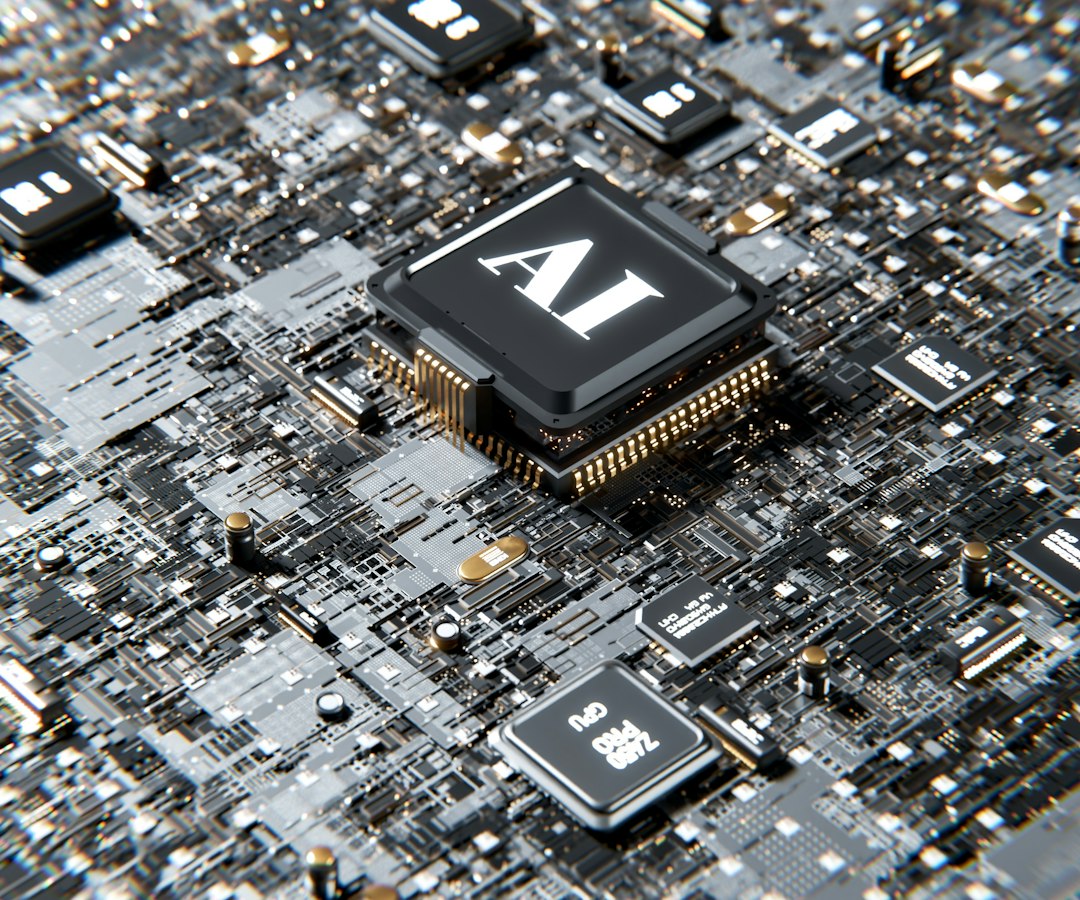
Nvidia Corp. has halted shipments of certain artificial intelligence chips to China that had previously received approval from the U.S. government, according to a report by Reuters. The decision, which was not accompanied by immediate details on the reason for the stop, adds fresh uncertainty to the global semiconductor supply chain and could have far-reaching implications for AI development worldwide—including in Atlanta, a city increasingly positioning itself as a hub for artificial intelligence and high-performance computing.
Atlanta's technology ecosystem has grown rapidly over the past decade, fueled by a dense network of data centers, a concentration of financial and logistics firms deploying AI, and world-class research institutions such as Georgia Tech and Emory University. Many of these organizations rely heavily on Nvidia's graphics processing units, or GPUs, which have become the de facto standard for training and running large AI models. Any disruption to the availability of these chips—even for markets outside China—can trigger price volatility, supply bottlenecks, and longer procurement timelines for local businesses and academic labs.
According to Reuters, the chips in question were previously cleared for export to China under existing U.S. regulations, suggesting that Nvidia's move may be tied to evolving trade policies or internal compliance decisions rather than a new government directive. Nvidia did not immediately provide a public explanation, leaving industry observers to speculate about the potential cascading effects. For Atlanta, the immediate concern is not direct trade with China but the secondary impact on the domestic supply of advanced AI hardware.
Georgia Tech's high-performance computing center, for example, operates some of the most advanced supercomputing resources in the Southeast, much of it built on Nvidia architecture. Researchers there are working on projects ranging from climate modeling to machine learning applications in healthcare and logistics. If Nvidia's global supply allocation shifts to prioritize other regions or if U.S. data center operators begin hoarding inventory in response to China-related shortages, local researchers could face delays in accessing the GPU clusters they need for time-sensitive experiments.
Atlanta's data center market has boomed in recent years, driven by relatively low electricity costs, robust fiber connectivity, and tax incentives. Major cloud providers and colocation companies have built massive facilities in the metro area, and many of these are packed with Nvidia GPUs rented out to AI startups and enterprise clients. A tightening of chip shipments to China could lead those same clients to stockpile available inventory domestically, driving up costs for smaller Atlanta-based firms that cannot negotiate large-volume contracts. The result could be a widening gap between well-capitalized tech giants and emerging local startups that are trying to scale their AI products.
The timing also coincides with a broader national conversation about U.S. competitiveness in AI and the role of export controls in safeguarding advanced technology. Atlanta's political and business leaders have been vocal about attracting more semiconductor and AI-related investment to the region. The city recently landed a major federal designation as a regional technology hub, and local economic development officials have been courting chip designers and AI software companies. Any prolonged disruption in the AI chip supply chain could complicate those efforts, as companies weigh the reliability of hardware access when choosing locations for expansion.
For now, the full scope of Nvidia's decision remains unclear. The Biden administration has tightened export restrictions on advanced AI chips to China over the past two years, but Nvidia had previously designed modified, lower-performance chips that complied with those rules. The Reuters report suggests that even those compliant chips are now being halted, which could signal a new phase in the U.S.-China technology standoff. Atlanta businesses and researchers will be watching closely, as the city's growing reliance on AI makes it particularly sensitive to any shifts in the global semiconductor market.
This story was originally reported by Reuters.