
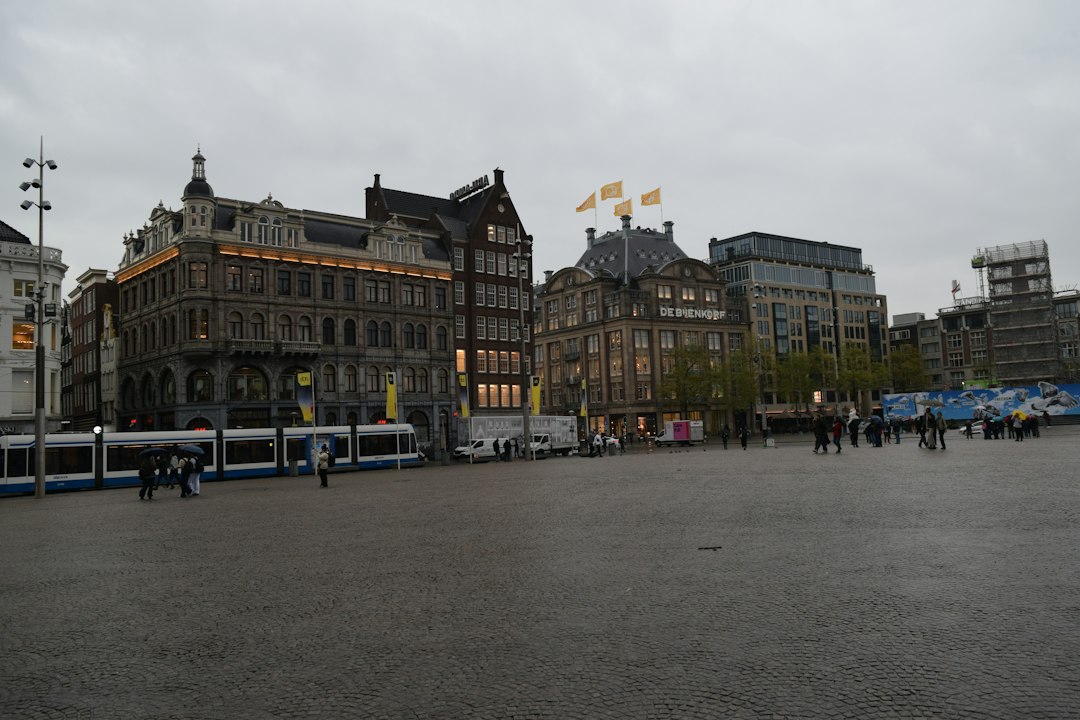
A gunman opened fire in the market square at the heart of Kraków, Poland, killing six people, and three additional victims were later discovered at the suspect's home, The Guardian reported. The combined toll stands at nine.
The details available so far are sparse. What is known is the shape of the event: a public attack in one of Europe's most heavily visited civic spaces, followed by the grim discovery of further victims at a residence connected to the suspect. Polish authorities have not released a motive in the reporting available, and the identities of the dead have not been made public.
Kraków's Rynek Główny is not an incidental location. It is the largest medieval town square in Europe, the civic and commercial center of a city of roughly 800,000 people, and a destination for millions of visitors a year. In American terms, it is the equivalent of an attack unfolding in Woodruff Park at midday, or along the pedestrian stretch of Centennial Olympic Park with families in line for the fountains. The violence did not happen at the margins of the city. It happened in the room where the city gathers.
That is the detail Atlanta readers will recognize first.
This is a city that knows what it means to have an ordinary public place turned into a crime scene. Atlanta buried eight people, six of them women of Asian descent, after the March 2021 spa shootings across Atlanta and Cherokee County. It has absorbed shootings in office buildings, in parking decks, outside nightclubs, and on residential streets in neighborhoods that rarely make the evening news. Metro Atlanta's gun violence does not usually arrive as a single catastrophic event; it arrives in ones and twos, week after week, which is its own kind of mass casualty.
The comparison is not meant to flatten the difference between the two places. It is meant to name it. Poland has some of the most restrictive firearms laws in Europe, with licensing requirements, demonstrated need, and background and medical screening standing between a civilian and a gun. Georgia, since 2022, has required no permit at all to carry a concealed handgun in public. A mass shooting in Kraków is a rupture in the expected order of things. In Georgia, it is a recurring feature of the calendar.
That asymmetry is worth sitting with rather than scoring points over. Restrictive law did not make Kraków immune. What it has done, by every available measure of comparative gun death rates, is make days like this rare rather than routine. Rarity is not the same as safety, but it is not nothing, either — and it is a policy outcome, not an accident of national character.
Atlanta also has a direct human stake. The metro area is home to a long-established Polish American community, with parish life, cultural organizations, and family ties that run back to postwar immigration and again to the post-1989 wave. Georgia State, Emory, and Georgia Tech all maintain exchange and research relationships with Polish universities, Kraków's Jagiellonian University among the oldest in Europe. For some Atlanta families, this story will be resolved by a phone call across six time zones rather than by a news alert.
For the rest of the city, it is a mirror. The square in Kraków and the park in downtown Atlanta serve the same purpose: they are the places a city decides to be public together. The question that follows a day like this — in Poland and in Georgia alike — is what a community is willing to do to keep those places ordinary.
Originally reported by Google News — World.