
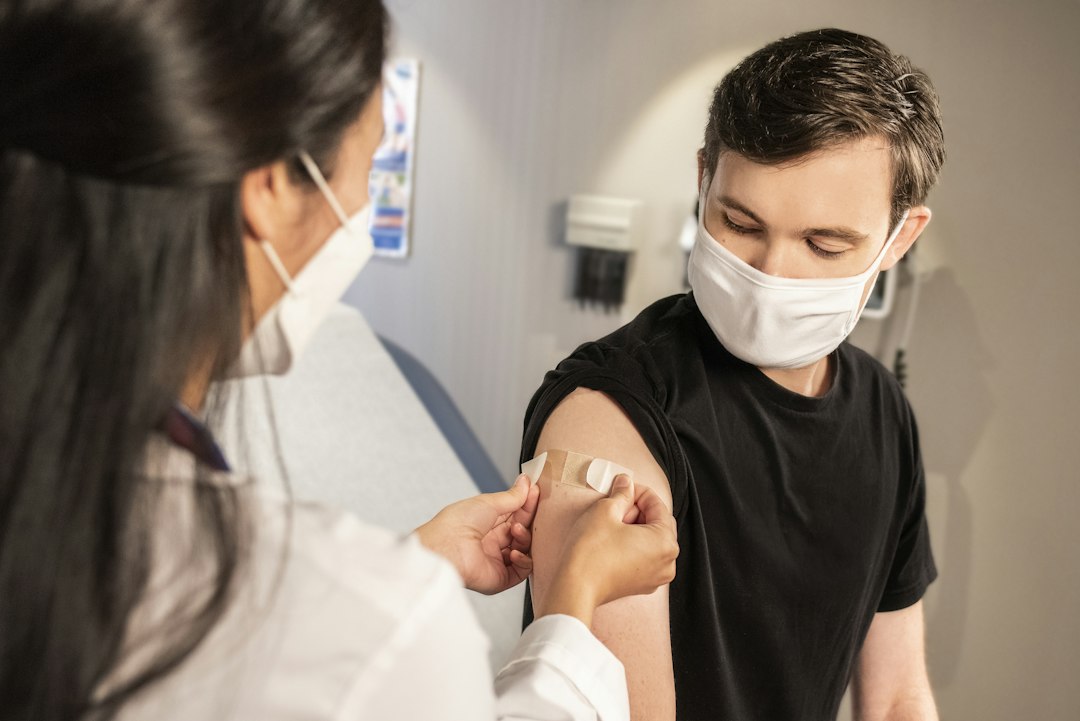
New York state health officials have reported the death of a child from causes linked to measles, the state's first such death in more than three decades, as an outbreak of the highly contagious virus continues, Reuters reported.
Details released so far are limited, and officials have not publicly described the child's age, hometown or vaccination status. But the milestone itself is stark: a measles death in a state of roughly 20 million people had not been recorded since the early 1990s, a stretch that covers the entire period during which the United States considered the disease effectively beaten.
For Atlanta, this is not a distant story. The Centers for Disease Control and Prevention sits on Clifton Road in DeKalb County, and the federal response to any measles outbreak — case counts, genotyping of virus samples, guidance to state and local health departments, and the national immunization schedule itself — is coordinated from that campus. When a child dies of a vaccine-preventable disease anywhere in the country, the questions land in Atlanta.
The city has another reason to pay attention. Hartsfield-Jackson Atlanta International Airport is among the busiest passenger airports in the world, and measles has historically entered the United States through travelers arriving from regions where the virus still circulates widely. Metro Atlanta's position as a global transit hub means local public health agencies treat imported cases as a live operational concern rather than a theoretical one, and a single confirmed case can trigger days of contact tracing across schools, clinics and terminals.
Measles is among the most transmissible diseases known to medicine. The virus spreads through the air and can remain infectious in a room for roughly two hours after an infected person has left it. Someone who is not immune and shares airspace with a case is very likely to catch it. Most people recover, but complications include pneumonia, ear infections that can cause permanent hearing loss, and encephalitis — swelling of the brain. Infants too young for their first shot, pregnant people and the immunocompromised carry the highest risk, and they depend on everyone around them being immune.
That protection comes from the measles, mumps and rubella vaccine, given in two doses: the first around 12 to 15 months of age, the second between ages 4 and 6. Two doses are highly effective, and the schedule has been standard in Georgia and across the country for decades. Georgia requires proof of immunization for school and child care enrollment, with medical and religious exemptions available through the state Department of Public Health.
The United States declared measles eliminated in 2000, meaning the virus no longer circulated continuously within its borders. Elimination is not eradication. It is a status that has to be defended every year by keeping community immunity high enough that an imported case burns out instead of catching. Where coverage slips — in a county, a school district, a single congregation — the virus finds the gap.
For progressive Atlantans who have watched public health become a partisan battleground since 2020, the New York death is a reminder of what is actually at stake in debates over exemptions, school requirements and vaccine messaging. The CDC's own guidance, drafted a few miles from downtown, has not changed: two doses, on schedule, for nearly every child.
Georgia families uncertain about their records can request immunization histories through the state's GRITS registry or their pediatrician, and adults born after 1957 who cannot document two doses can be revaccinated safely. It is a small administrative errand. In New York this week, the cost of the alternative became concrete.
Originally reported by Google News — Reuters.