
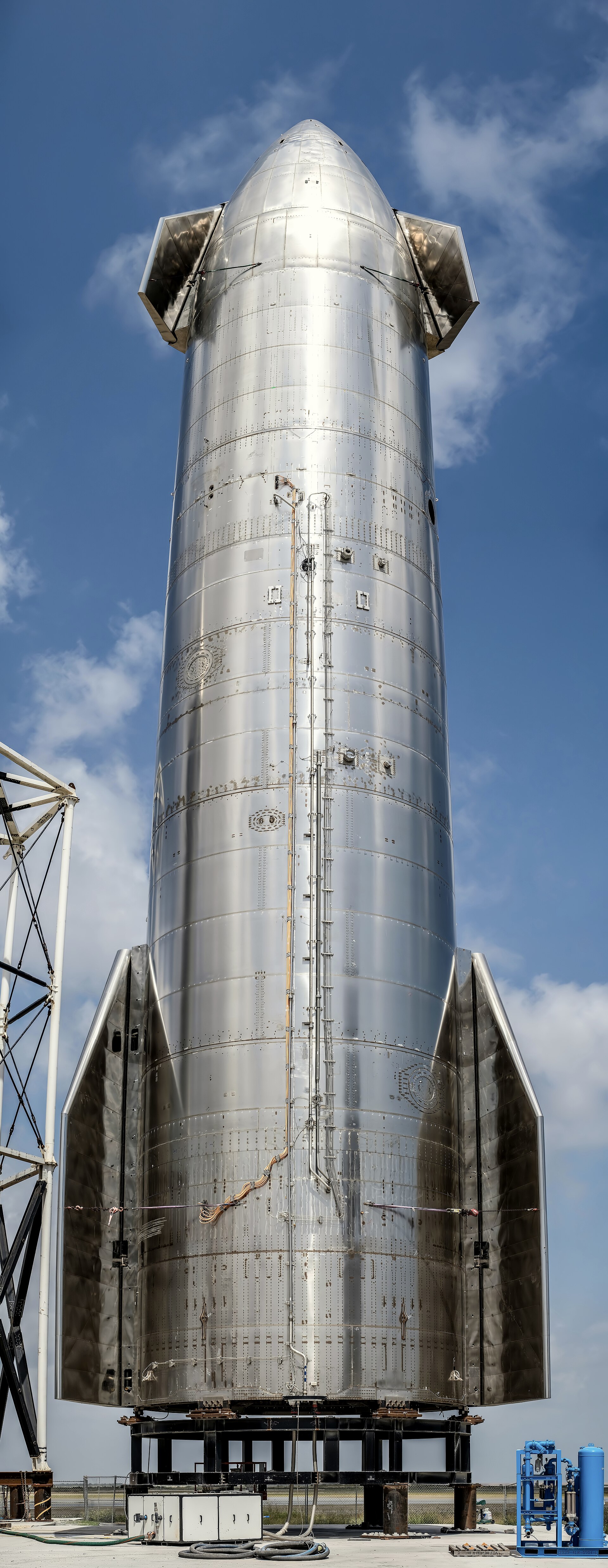
Elon Musk's rocket company SpaceX has overtaken Amazon to become the world's fifth most valuable firm, the BBC reported.
The milestone marks a striking moment in the rise of the privately held space company, which now ranks among the most valuable businesses on the planet — leapfrogging one of the corporate giants that has helped define the modern American economy.
For a privately held company to climb into the top five by value is notable on its own. Most of the firms occupying the upper reaches of global valuation rankings are publicly traded technology companies whose shares change hands daily on open markets. SpaceX, by contrast, remains in Musk's control and is not listed on any public exchange, meaning ordinary investors cannot easily buy a stake.
While the news plays out on a global stage, it carries real weight for Atlanta, a city that has been working to position itself within both the aerospace and logistics industries that SpaceX and Amazon represent.
Georgia has spent years courting the commercial space sector. State officials have pursued spaceport ambitions on the coast and have promoted the broader aerospace supply chain as an engine for high-wage jobs. Aerospace consistently ranks among Georgia's largest export categories, and metro Atlanta is home to a deep bench of engineering talent fed by Georgia Tech and the region's universities. The ascent of a company like SpaceX underscores how much economic momentum is now tied to commercial spaceflight — a field that state leaders have argued Georgia should compete for rather than cede to Florida, Texas and California.
The firm SpaceX surpassed, Amazon, is itself a major presence in the Atlanta region. The e-commerce and cloud-computing company operates fulfillment centers, delivery stations and sortation facilities across metro Atlanta and employs thousands of Georgians. Its logistics footprint has reshaped warehouse real estate, hiring patterns and traffic along the region's interstate corridors. Any shift in the relative standing of these corporate titans is closely watched by the local workers, suppliers and communities whose livelihoods are connected to them.
The comparison between the two companies also reflects a broader transition in where investors see future growth. Amazon built its valuation on retail, cloud services and a sprawling delivery network. SpaceX has built its standing on reusable rockets, satellite launches and its Starlink internet service. That a space venture can now be valued above an established logistics and technology powerhouse signals how investor expectations are evolving — a trend with implications for the kinds of industries cities like Atlanta choose to recruit and nurture.
For Atlanta's business community, the development is a reminder that the competition for the industries of the future is intensifying. Economic development officials across the Southeast have made aerospace, advanced manufacturing and technology central to their recruitment pitches. As commercial space companies grow in value and ambition, the pressure on regions to offer the workforce, infrastructure and incentives needed to attract them is likely to grow as well.
SpaceX's climb up the rankings is, for now, a marker of how dramatically the global corporate landscape is changing. For a region staking part of its economic future on aerospace and logistics, it is also a signal worth heeding.
Originally reported by Google News — World.