
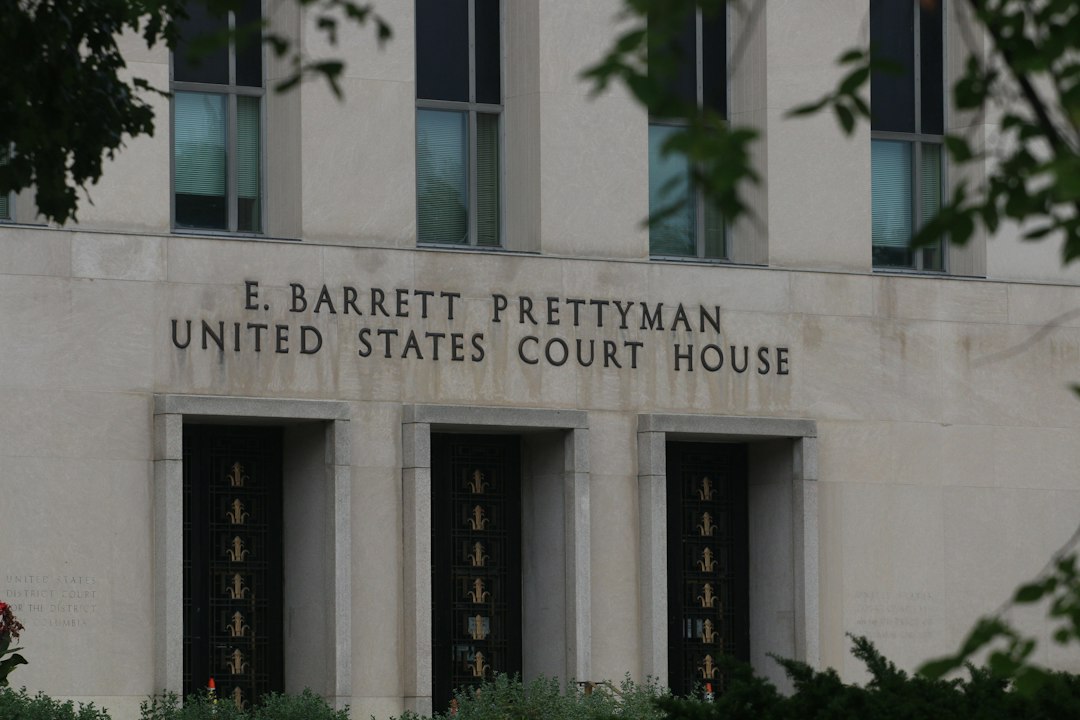
A federal district judge has blocked a Trump administration rule that would have required Medicaid enrollees who are ill to prove they are impaired in order to keep their health coverage, handing a victory to a coalition of 25 states and the District of Columbia that sued over the policy.
The decision, reported Thursday, halts a regulation that would have shifted the burden of proof onto some of the program's most vulnerable participants — people managing serious illness who would have had to document the extent of their impairment to remain enrolled. The states argued in their lawsuit that the administration overstepped in imposing the requirement. The judge sided with them.
Al Jazeera's report did not specify which states joined the lawsuit, nor did it detail the full reasoning behind the ruling or whether the administration intends to appeal. Court challenges to major federal health rules are frequently appealed, and a district court ruling is rarely the final word.
**Why it matters in Georgia**
For Atlanta, the ruling arrives against a backdrop in which Medicaid paperwork is not an abstraction. Georgia is one of a small number of states that never adopted full Medicaid expansion under the Affordable Care Act, leaving a long-documented coverage gap: residents who earn too much to qualify for traditional Medicaid but too little to receive subsidized marketplace plans. Advocacy organizations and safety-net providers across metro Atlanta have spent more than a decade describing the consequences of that gap in emergency rooms, free clinics and county health departments.
Georgia also runs Pathways to Coverage, the state's limited alternative to expansion, which conditions eligibility on documented work, study or volunteer activity. Enrollment in that program has consistently fallen well short of initial state projections, and researchers and patient advocates have pointed to documentation and verification requirements as a significant part of the reason. The pattern is familiar to anyone who has followed Georgia health policy: when coverage depends on filing the right paperwork at the right time, people who are eligible often lose coverage anyway.
That is precisely the dynamic the blocked federal rule would have introduced nationally for ill enrollees. A requirement to prove impairment is, in practical terms, a documentation requirement — one that falls hardest on people who are too sick to navigate it, who lack a regular physician to sign forms, or who move frequently and miss mailed notices. Metro Atlanta's safety-net system, already stretched by hospital closures in surrounding rural counties and by the region's uninsured rate, absorbs those losses directly.
**What happens next**
The injunction leaves the current rules in place while litigation continues. For Georgia Medicaid enrollees, nothing changes immediately — the rule was never implemented, and the state's own eligibility requirements under Pathways operate separately from the federal policy at issue.
The broader question is how much authority the federal government has to attach conditions to Medicaid eligibility without new legislation from Congress. That question has moved through the courts repeatedly over the past decade, through multiple administrations, with mixed results. The 25-state coalition's success at the district level suggests at least one judge found the administration's legal footing insufficient.
Georgia's congressional delegation and the Gold Dome have both treated Medicaid policy as a recurring flashpoint, with expansion bills introduced and shelved in successive legislative sessions. State lawmakers return to the Capitol in January, and health coverage is expected to be among the issues raised again. How a federal court's view of Medicaid conditions shapes that debate — if at all — remains to be seen.
AtlantaStar will continue following the case and its implications for Georgia enrollees.
*Originally reported by Al Jazeera — All News.*