
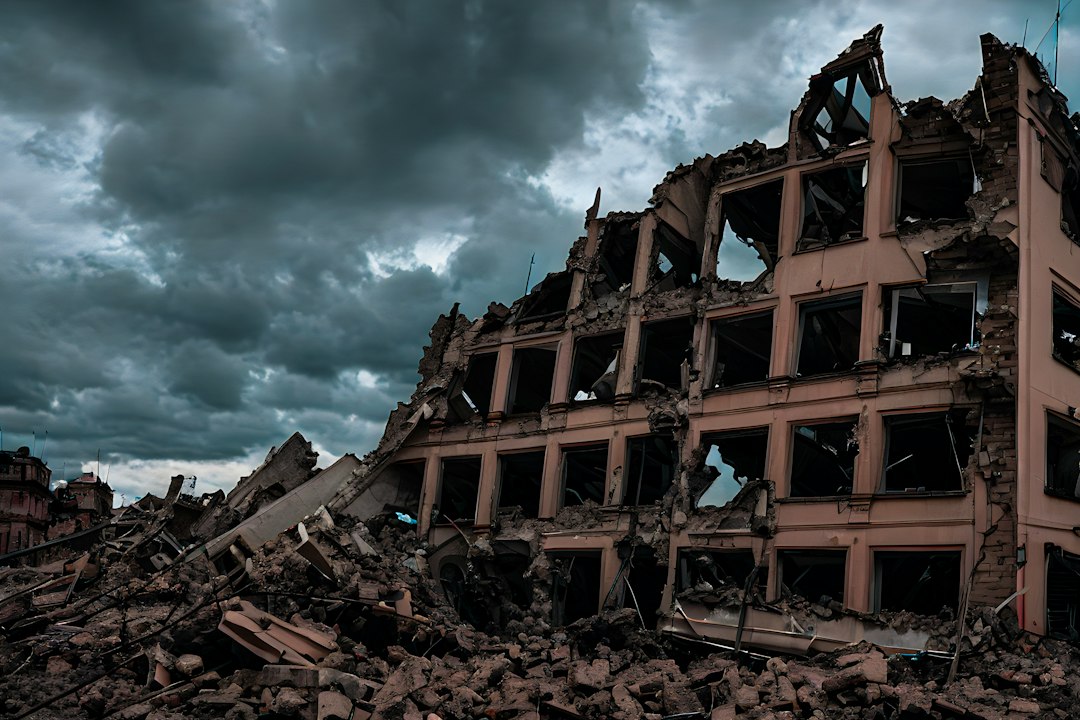
An American physician who has treated patients in Gaza is mourning a friend killed in an Israeli strike on a hospital there, summing up the attack in a phrase that has since circulated widely: "It's just barbarism."
The remarks came from Dr. Feroze Sidhwa in an interview broadcast by Democracy Now!, the independent news program, and carried through Google News' Gaza feed. Sidhwa, a physician who has volunteered inside Gaza's health system, spoke about the death of a friend and colleague in the strike.
The syndicated item available for this report carried only headline-level detail. The name of the colleague Sidhwa mourned, the hospital struck, the date of the strike and the number of other people killed or wounded were not included in the material AtlantaStar reviewed. Readers seeking those specifics should consult the original Democracy Now! broadcast. This newspaper does not fill such gaps with estimates, and the absence of detail in a syndicated summary is not evidence that the underlying account is incomplete — only that the wire item was.
What the account does place in front of readers is the status of hospitals in armed conflict. Under the Geneva Conventions and customary international humanitarian law, medical facilities, ambulances and health workers carry special protection. That protection is not a courtesy; it is a legal obligation binding on all parties to a conflict. A hospital can lose its protected status only in narrow circumstances, and even then an attacking force must issue warning and allow time for patients and staff to be moved. Deliberate or indiscriminate attacks on functioning medical facilities are among the acts that United Nations bodies and human rights organizations including Amnesty International, Human Rights Watch and the Israeli group B'Tselem have repeatedly asked investigators to examine as possible war crimes. The legal question in any individual strike is a matter for independent investigation — which is precisely what accountability advocates have been demanding and have largely not received.
The clinical stakes are not abstract in Atlanta. The city anchors one of the largest medical complexes in the American South: Grady Memorial Hospital, whose Level I trauma center treats the region's most severely injured patients; the Emory University School of Medicine; the Morehouse School of Medicine; and the headquarters of the Centers for Disease Control and Prevention. Atlanta trauma surgeons, emergency physicians and nurses work inside the same logic Sidhwa invoked — that a hospital is the place violence stops, not a place it is aimed. Atlanta is also a training ground and staging point for global health work, sending clinicians into epidemics, earthquakes and war zones, and expecting them to come home.
That expectation is what makes the killing of medical personnel resonate in a city like this one. Physicians who volunteer in conflict zones do so on the premise that the red cross or red crescent on a building means something enforceable. When a colleague is killed inside that building, the premise itself is what collapses — and with it, the willingness of doctors and nurses to go at all. The downstream effect falls on patients: fewer surgeons, fewer functioning operating theaters, more preventable deaths that never appear in a casualty count attributed to any single strike.
Atlanta's civil rights tradition has long insisted that human rights claims do not stop at a border. The Rev. Dr. Martin Luther King Jr. made that argument from an Atlanta pulpit about a war half a world away, and the city's institutions — its universities, its faith communities, its diaspora populations — have carried the argument forward in the decades since. The question raised by a physician's grief on a national broadcast is the same question King raised: whether the law applies to everyone, or only to the people with the weakest claim on it.
For now, Sidhwa's three-word verdict stands as the record. Whether any independent body examines the strike that prompted it remains, as with most incidents documented in Gaza, an open question.
Originally reported by Google News — Gaza.