
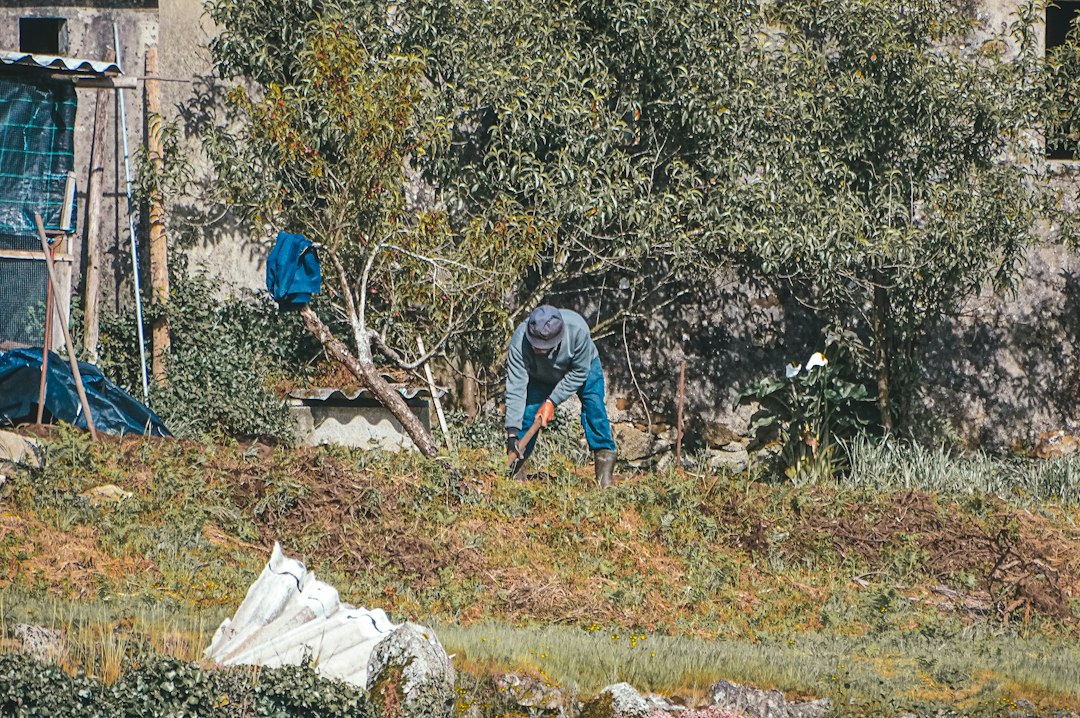
A group of former Israeli military generals has offered its help to Palestinian olive farmers in the occupied West Bank, Al Jazeera reported Thursday, placing retired commanders of the Israeli army alongside the families whose groves sit at the center of one of the occupation's most persistent flashpoints.
The report, carried on Al Jazeera's newsfeed, did not specify how many retired officers took part, where in the West Bank they worked, or how long the effort will continue. What is documented is the setting: the annual olive harvest, which runs through the autumn and is both an economic lifeline and a marker of Palestinian presence on the land.
For thousands of Palestinian families, the olive harvest is not a seasonal chore but the core of the household budget. Groves are inherited across generations, and trees that have stood for decades or longer are treated as family record as much as farm asset. Reaching them, however, is frequently not a matter of walking out the door. Many groves lie near Israeli settlements, behind the separation barrier, or inside areas where Palestinian access requires advance coordination with the Israeli military and is granted only on limited days.
Human rights organizations have documented the pattern for years. The United Nations' humanitarian coordination office, the Israeli group B'Tselem, Amnesty International and Human Rights Watch have all recorded harvest-season attacks on Palestinian farmers, the destruction and theft of trees and crops, and access restrictions that leave fruit to rot on the branch. The groups have repeatedly faulted Israeli authorities for failing to protect farmers or to prosecute those responsible.
That is the legal backdrop that makes the involvement of former generals notable. Israeli settlements in occupied territory are widely held to violate international humanitarian law, including the Fourth Geneva Convention's prohibition on an occupying power transferring its civilian population into territory it holds. In July 2024, the International Court of Justice issued an advisory opinion finding Israel's continued presence in the occupied Palestinian territory unlawful and calling for the removal of settlements. The court's finding addressed state obligations, not individual conduct — which is why accompaniment by retired officers, however meaningful to the families involved, does not alter the underlying legal question.
Still, the gesture carries weight because of where it originates. The Israeli army is the body that enforces closures, issues harvest coordination permits and polices settler violence in the West Bank. Retired figures from that establishment turning up in Palestinian groves is a public act by people who once held command authority over the system now being criticized.
For Atlanta readers, the olive harvest is closer to home than it may appear. Metro Atlanta is home to a substantial Palestinian and Arab American community, with mosques, churches and cultural organizations in Clarkston, Decatur and the northern suburbs that have organized harvest-season fundraisers and aid drives. Fair-trade Palestinian olive oil, sold through cooperatives that route proceeds back to West Bank farming families, has become a fixture of those efforts in U.S. cities.
Georgia also sits at the center of American debate over Palestinian advocacy. The state passed an anti-boycott law in 2016 requiring certain state contractors to certify they are not boycotting Israel, a measure that has drawn First Amendment litigation and remains a point of contention for Atlanta activists and civil liberties attorneys. And the Carter Center, founded by the late President Jimmy Carter, built part of its international reputation on election monitoring and conflict mediation in the region — work that made Atlanta an unlikely but durable node in the American conversation about Israeli and Palestinian rights.
Atlanta's own civil rights history supplies the frame that local organizers most often reach for: the idea that people inside a system of control can choose to stand with those subject to it. Whether a handful of retired generals in an olive grove amounts to more than a symbol will depend on what follows — on whether access improves, whether attacks are prosecuted, and whether the institutions they once led change course.
Originally reported by Al Jazeera — All News.