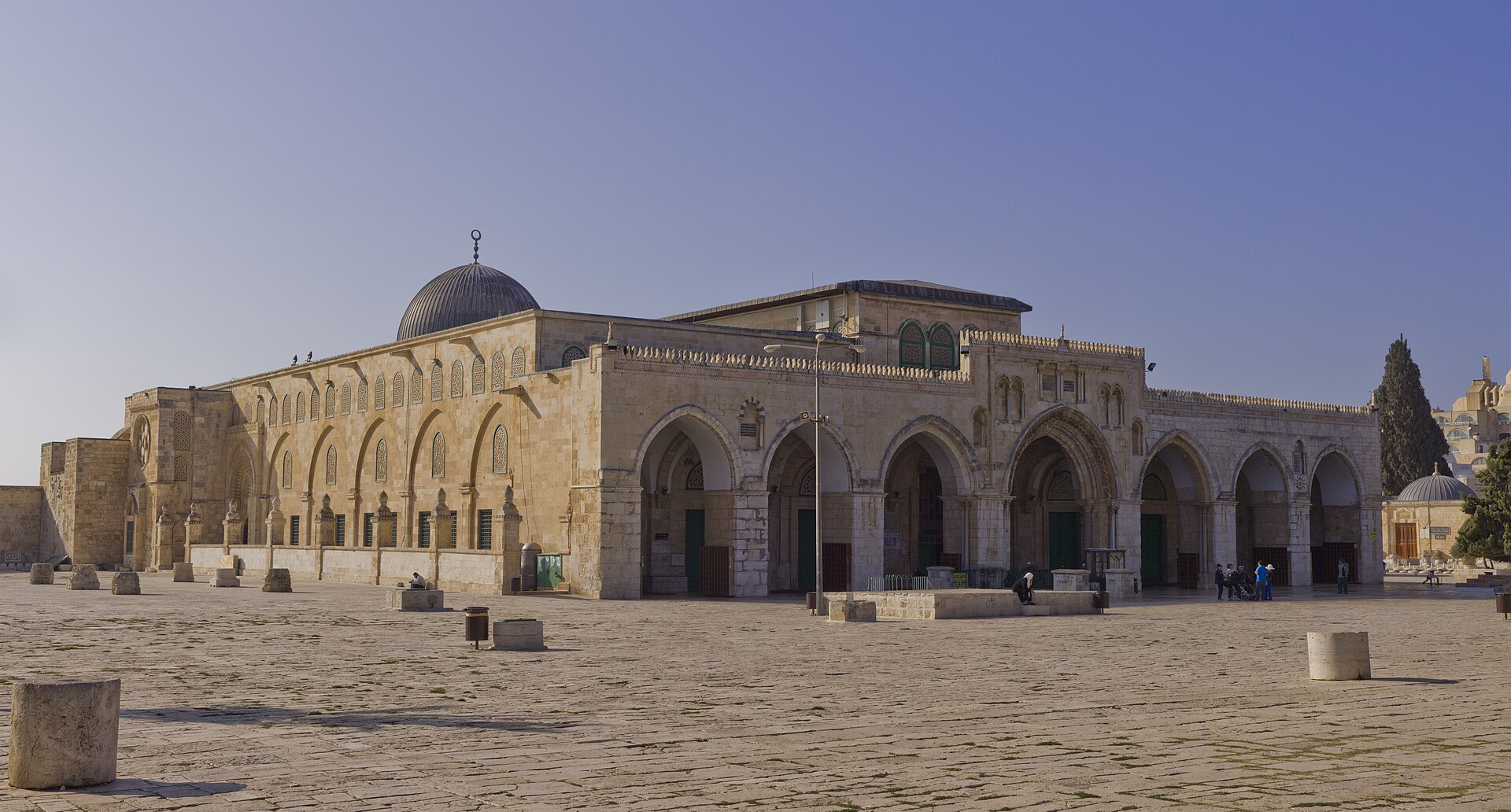
Israeli authorities have renewed an order barring an imam of the Al-Aqsa Mosque from the compound, part of a widening pattern of bans that is pushing Palestinian clerics and worshippers away from Islam's third-holiest site, Al Jazeera reported this week.
Officials with the Islamic Waqf — the Jordanian-administered endowment that has historically administered the Al-Aqsa compound in occupied East Jerusalem — told Al Jazeera that their authority over the site is shrinking as Israel tightens its control. The renewed ban on the imam, they warned, is not an isolated disciplinary measure but one piece of a broader erosion of Palestinian religious governance at the mosque.
Access bans of this kind are administrative. They are issued by Israeli police and security services rather than through criminal proceedings, meaning the people subject to them are typically kept out of the compound without charge, trial, or a public evidentiary record. Applied to an imam, the order does not simply restrict one person's movement; it removes a religious leader from the congregation he serves and transfers an effective veto over who may preach at the site to the occupying power.
The legal context matters. Israel occupied East Jerusalem, including the Old City and the Al-Aqsa compound, in 1967 and later moved to annex it — a step that has never been recognized by the United Nations or by the overwhelming majority of the international community, which continues to treat East Jerusalem as occupied territory. Under the Fourth Geneva Convention, an occupying power is obligated to respect the religious practices and institutions of the occupied population. Restrictions on worship and on the clergy who lead it sit directly in the path of that obligation.
The story carries weight more than six thousand miles away, in a metro Atlanta that is home to a large and growing Muslim population and dozens of mosques, from the Al-Farooq Masjid on 14th Street to congregations spread across Clarkston, Decatur, Alpharetta and the southside. Al-Aqsa is not an abstraction in those spaces. It is a fixture of Friday sermons, of children's religious education, and of the pilgrimage plans of families who have spent years saving for a trip that administrative bans and checkpoint closures can render impossible without warning.
Atlanta also brings its own vocabulary to a story about who is permitted to enter a house of worship. This is a city whose moral authority was built in sanctuaries — Ebenezer Baptist, the West Hunter Street congregations, the churches that functioned as organizing halls when other doors were closed. The principle that a state may not decide which clergy are allowed to preach, or which worshippers are allowed through the door, is not a foreign import here. It is the center of Atlanta's own civil rights inheritance.
That inheritance has given the city an unusually dense network of interfaith organizing, including Muslim, Jewish, Palestinian-American and Black church coalitions that have pressed Georgia's congressional delegation on U.S. policy toward Israel and Palestine. Restrictions at Al-Aqsa have repeatedly been a flashpoint in that advocacy, in part because the site's status is one of the few issues capable of escalating regionally within hours.
What the Waqf officials described to Al Jazeera is a slow, procedural transfer of control — bans issued and renewed one at a time, each individually small, collectively amounting to a change in who governs the compound. Human rights monitors have long argued that incremental administrative measures of this kind are harder to contest precisely because no single order appears dramatic enough to trigger international response.
For readers in Atlanta, the accountability question is the familiar one: whether U.S. officials, including Georgia's delegation, treat freedom of worship at Al-Aqsa as a legal obligation under international law, or as a regional dispute to be managed quietly.
Originally reported by Al Jazeera — All News.