
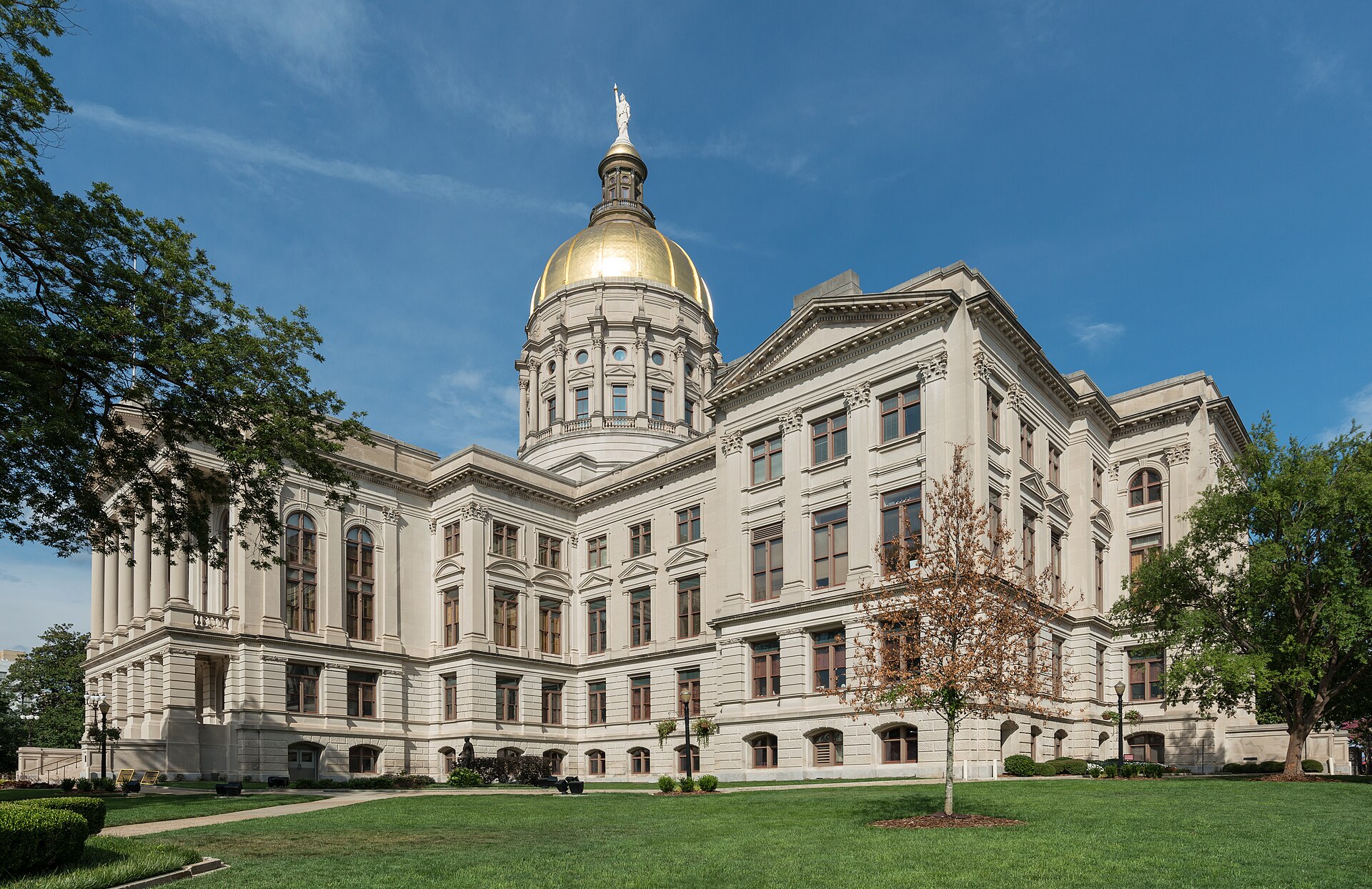
Atlanta News First's political program "On the Record" recently turned its attention to Georgia's upcoming Senate and governor races, alongside coverage of Trump's Dallas convention. For progressives in the Peach State, the segment served as a reminder that while the midterm elections are still two years away, the early indicators suggest a difficult cycle for Republicans.
The Georgia political landscape has shifted dramatically in recent cycles. The state that once reliably backed Republican candidates has become a true battleground, with Democrats flipping both Senate seats in 2021 and narrowly losing the governor's race in 2022. As attention turns to 2026, when Senator Jon Ossoff's seat is up for re-election and the governor's mansion will be open due to term limits, Republicans face significant headwinds. The state's demographic transformation—driven by growth in the Atlanta metropolitan area and an increasingly diverse electorate—continues to favor Democratic candidates, even as GOP-led efforts to restrict voting access attempt to blunt that advantage.
Trump's Dallas convention, also noted in the Atlanta News First segment, underscores the Republican Party's ongoing internal turmoil. The former president's continued dominance of the party's grassroots base forces candidates to embrace extreme positions that alienate suburban voters, a key bloc in Georgia's battleground status. The convention's focus on grievance politics and election denialism does little to win back the moderate Republicans and independents who have fled the party in recent years. Instead, it deepens the divide between the GOP's far-right wing and the broader electorate, a dynamic that cost Republicans winnable races across Georgia in 2020 and 2022.
Analysts tracking Georgia's midterm outlook point to several structural challenges for the GOP. Candidate quality remains a persistent problem, as primary voters often reward far-right contenders who struggle in general elections. Policy positions such as near-total abortion bans and opposition to Medicaid expansion are deeply unpopular with a majority of Georgians, yet Republican candidates are constrained by their base from moderating. Meanwhile, Democratic fundraising and organizing infrastructure in the state has matured significantly since 2020, giving candidates like Ossoff a strong foundation for what is expected to be a well-funded and highly competitive campaign.
For Atlanta's progressive community, the early signals from Georgia's political stage are encouraging. The state's growing diversity, combined with Republican overreach on social issues, continues to push the electorate leftward. While no election is guaranteed, the combination of Democratic momentum and Republican divisions—on full display at events like the Dallas convention—suggests that the 2026 midterms could once again be a rough cycle for the GOP in Georgia.
Originally reported by Google News — Atlanta. Source: https://news.google.com/rss/articles/CBMiqwFBVV95cUxPTUhyVG5GV05sNkduTGphUUQtRzhxd1ZFWGJnaWJpelkxSTdCOXh4Yy11QkVKX0tHeVdiU05Cb0ozN1d6YjlzYjBDNHlXTlV6ZjZvOEw1QnNYNWxWdEFIQU5qckxwZklKMGxlaE1vUlMySkNob2NfU00xRVRnNVJhRnZpWEVaSDRvRUEzX1liZFBkeENQN0wtRG5hUUJRS0JMUXNTTUFWTXM3bXc?oc=5