
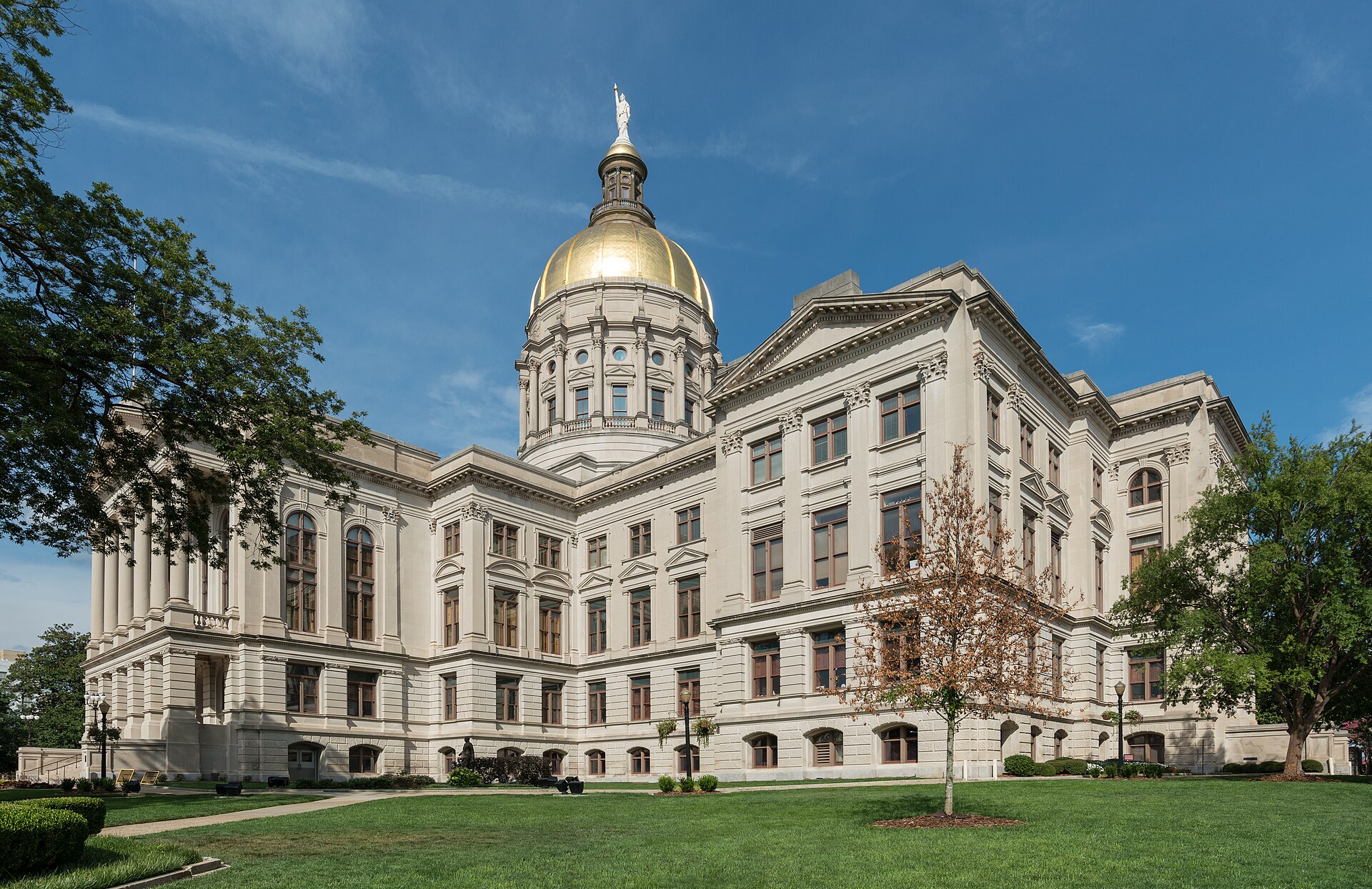
A special legislative session called to redraw Georgia's political maps has ended in failure, with Republican leaders backing down after a wave of voter pressure, according to reporting first published by the Atlanta Daily World.
The collapse marks a notable retreat for a party that has long controlled the levers of redistricting under the Gold Dome. Special sessions are typically convened with a clear objective and the votes to achieve it. That this one ended without delivering new maps signals that the political ground beneath Georgia Republicans has shifted — and that organized public opposition was enough to stall the effort before it could be finished.
For Atlanta, the outcome carries direct stakes. The metro area's growing, increasingly diverse electorate has been at the center of Georgia's redistricting battles for years, as map-drawers weigh how district lines are carved through Fulton, DeKalb, Cobb, Gwinnett and surrounding counties. How those boundaries are drawn shapes who represents the region in Congress and the General Assembly, and how much weight Atlanta voters carry relative to the rest of the state. A failed session leaves the existing arrangement in place, at least for now.
The headline takeaway — that voters forced Republicans to back down — fits a broader pattern that political observers have been tracking ahead of the midterms. Across the country, Republicans have struggled to advance unpopular measures when confronted with sustained, organized opposition, and Georgia has repeatedly proven to be one of the most competitive states in the nation. Joe Biden carried it in 2020, Raphael Warnock and Jon Ossoff flipped both U.S. Senate seats, and turnout in metro Atlanta has been the decisive factor in race after race.
Against that backdrop, the inability to push redistricting through a special session reads as more than a procedural hiccup. It suggests that Georgia Republicans are increasingly wary of picking fights that energize the Democratic-leaning coalition centered on Atlanta — Black voters, young voters, suburban women and newcomers to the state — that has already reshaped the state's politics. Forcing the majority into a public retreat is the kind of mobilization that tends to compound: it builds organizing infrastructure, sharpens messaging and feeds the sense of momentum that drives volunteers and donors in an election year.
The episode also underscores a candidate- and agenda-quality problem that has dogged Republicans nationally. When a party cannot hold its own caucus together long enough to complete a session it called, or cannot withstand constituent backlash on a core priority, it raises questions about discipline and about whether the underlying policy goals command public support. Redistricting fights, in particular, can backfire when voters perceive them as an attempt to entrench power rather than to fairly represent communities.
Specific details about the session — including vote counts, the proposed maps and the lawmakers involved — were limited in the original report, and the full implications will become clearer as legislative leaders respond and as any litigation or future sessions take shape. What is clear is that an effort meant to lock in advantages instead ended in a public-facing defeat.
For Democrats eyeing the midterms, the message is straightforward: in Georgia, organized voters can still stop a Republican priority cold. For the GOP, the retreat is a reminder that the state remains stubbornly competitive, and that the Atlanta-centered electorate is not one to be redrawn quietly.
Originally reported by Google News — Atlanta.