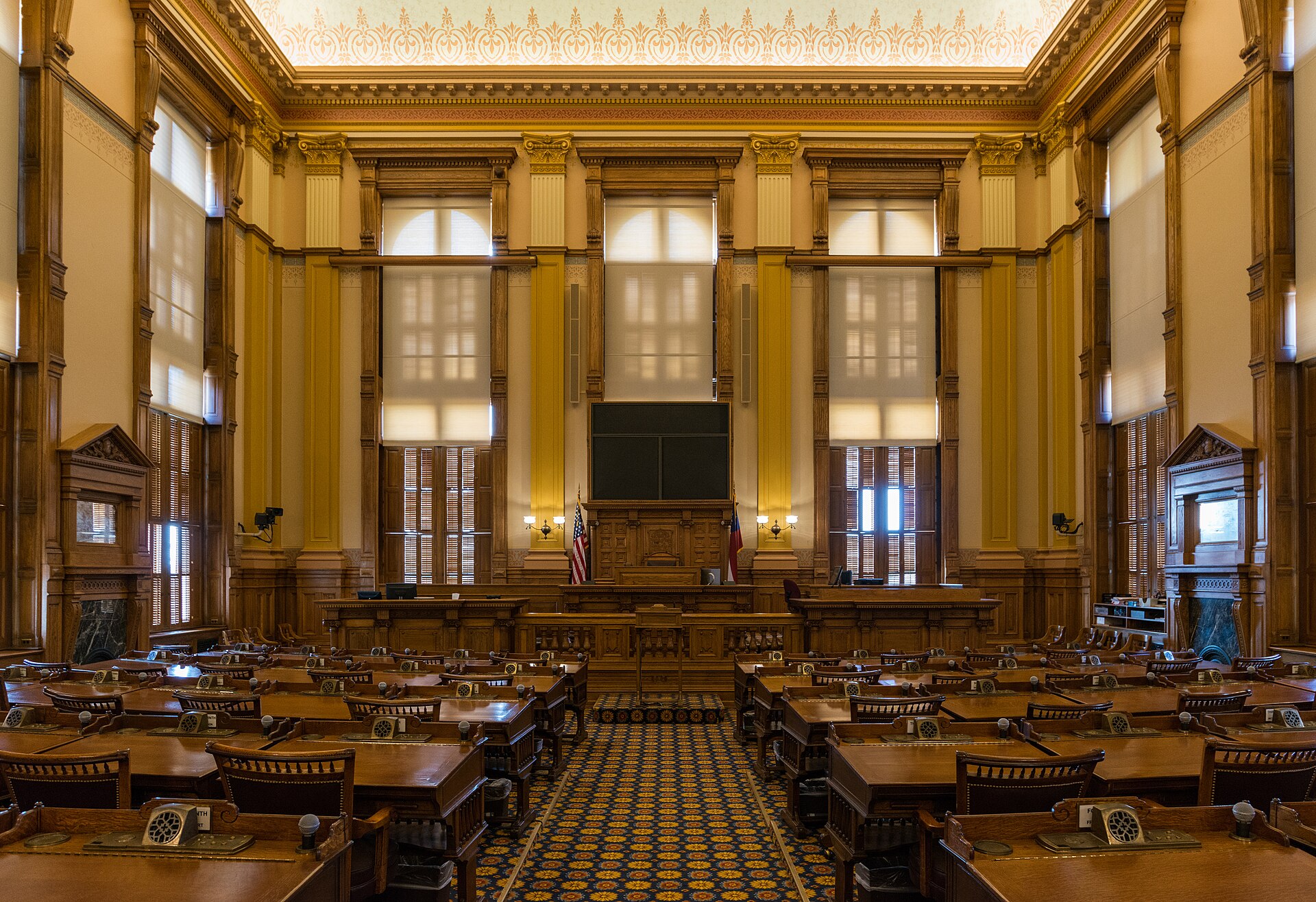
Georgia Senate Republicans are reorganizing their leadership team in the wake of election losses, Capitol Beat News Service reported — a reshuffle inside a caucus that has run the chamber for more than two decades, and one that arrives just weeks before lawmakers return to the Gold Dome in downtown Atlanta.
Capitol Beat's report attributes the changes directly to the party's performance at the ballot box. The specific posts changing hands, the members involved, and the internal vote counts behind the shuffle were not detailed in the report available to the Star, and AtlantaStar has not independently confirmed the composition of the incoming leadership slate. Caucus leadership elections are typically held behind closed doors, with results announced after the fact — meaning the full picture of who gained and who lost standing may emerge in pieces over the coming weeks.
What is not in dispute is that the positions at stake carry real weight. Senate leadership controls committee assignments, decides which bills get a hearing and which quietly die, and sets the floor calendar that determines what reaches a vote before the session clock runs out. For Atlanta-area residents, that machinery is the difference between a transit funding bill, a housing measure, or a local-control question getting a committee slot and getting shelved. A caucus that reorganizes its leadership after a bad night is also a caucus renegotiating its priorities, and that renegotiation happens before a single gavel falls in January.
The Atlanta angle is central rather than incidental. Metro Atlanta is where Georgia's partisan math has moved most over the past decade. Fulton, DeKalb and Clayton counties have been reliably Democratic for years, but the longer-running story has been in the suburban and exurban ring — Cobb, Gwinnett, Henry, Douglas and Rockdale — where rapid growth and demographic change have steadily eroded Republican margins in districts the party once held without serious contest. Those are the seats that decide whether a Senate majority is comfortable or precarious, and they are the seats a leadership team must defend heading into the next cycle.
Leadership turnover after an election is one of the clearest tells a legislative caucus offers about its own internal assessment. Parties that believe they lost because of circumstance tend to keep their leaders and wait for the cycle to turn. Parties that conclude their losses were self-inflicted — a product of message, candidate quality, or an agenda that outran its constituency — replace the people who set the strategy. The reshuffle Capitol Beat describes falls in the second category by definition: the report ties the changes to the losses themselves.
That pattern is worth watching beyond the state Capitol. Georgia has spent three straight cycles as a genuine battleground, and the suburban counties around Atlanta have been the mechanism of that shift. When a legislative caucus responds to results by changing its command structure rather than its explanation, it is conceding that the terrain has moved and that the old playbook did not hold. Whether the new team reads that concession as a mandate to moderate on the issues driving suburban defections, or as a reason to consolidate around a narrower base, is the question that will define the upcoming session.
Several things remain unresolved and will be worth tracking as the session approaches. Which specific leadership posts changed, and who holds them now. Whether committee chairmanships are reassigned alongside the leadership slate, which is where the practical consequences for legislation usually show up. How the incoming team handles the metro Atlanta delegation, both its own members in contested suburban districts and the Democratic members who represent the city's core. And what the caucus signals about the bills it intends to prioritize when the General Assembly convenes in January.
AtlantaStar will continue reporting on the Senate leadership changes and their implications for legislation affecting metro Atlanta as details are confirmed.
Originally reported by Google News — Atlanta.