
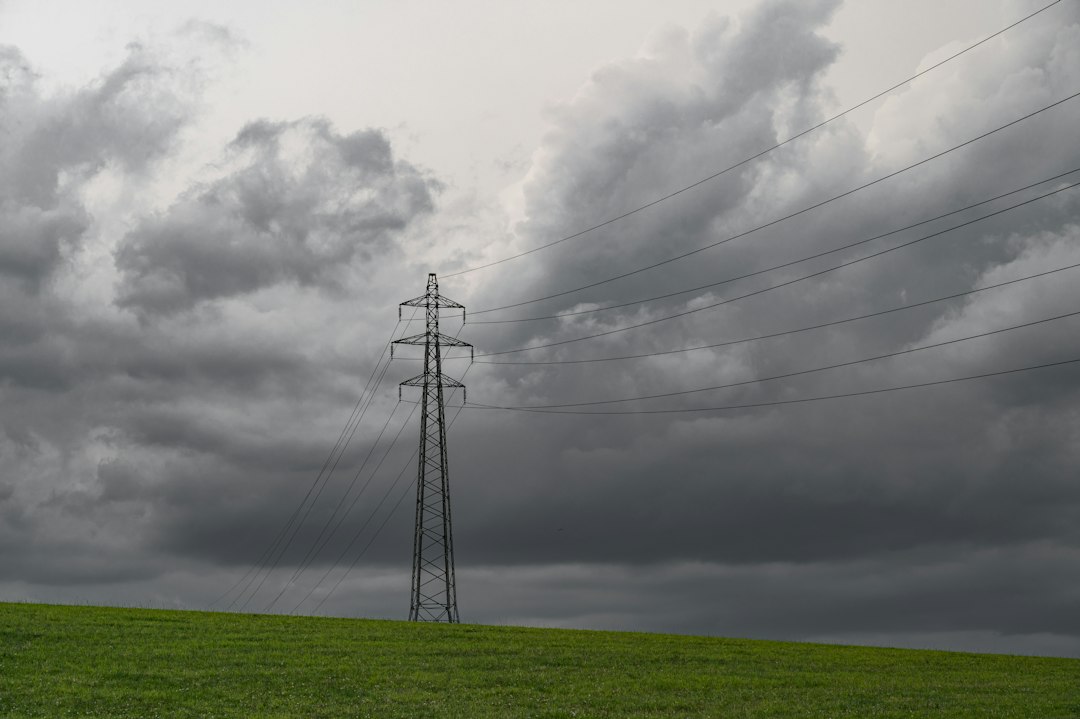
Georgia will receive $16 million to strengthen its electric power grid, FOX 5 Atlanta reported this week — a comparatively modest investment that nonetheless lands at a moment when the reliability of the state's wires, poles and substations has become a front-line climate question.
The report, distributed through Google News — Atlanta, did not detail in the available summary which specific projects, utilities or service territories will see the money, or over what timeline it will be spent. Those details matter enormously in a state where grid ownership is split between Georgia Power, which serves most of metro Atlanta, dozens of rural electric membership cooperatives, and municipal systems in cities and towns across all 159 counties. AtlantaStar will update this story as the allocation's terms become clear.
What is already clear is the problem the money is meant to address. Grid hardening — replacing aging poles with stronger materials, burying or rerouting vulnerable distribution lines, adding sensors and automated switches that isolate faults, and trimming vegetation along corridors — has moved from routine maintenance to climate adaptation. Georgia's outages increasingly arrive not from gradual wear but from sudden, severe weather events that overwhelm infrastructure designed for a calmer century.
The pattern is familiar to anyone who has sat in a dark house in DeKalb or Fulton County after a summer line of thunderstorms. It was unmistakable in September 2024, when Hurricane Helene drove far inland from the Gulf and left hundreds of thousands of Georgia customers without power, with the heaviest damage falling on Augusta and the agricultural counties of south and east Georgia. Storms that once weakened over land are now arriving with more moisture and more punch, and they are reaching the Piedmont — not just the coast.
That inland reach is central to the Atlanta angle. The city sits roughly 250 miles from the Atlantic, a geography that long functioned as insulation. It no longer does. Metro Atlanta's tree canopy, prized for shade and stormwater absorption, also sits directly above thousands of miles of overhead distribution lines; high winds turn an environmental asset into an outage risk. Meanwhile, longer and hotter summers push air conditioning demand to new peaks precisely when the grid is most stressed, and extended outages during heat waves are a public health emergency for seniors, renters without backup cooling, and residents of older housing stock in the city's historically disinvested neighborhoods.
The demand side of the equation is shifting just as fast. Georgia has become one of the country's most aggressive magnets for data centers, concentrated heavily in the metro Atlanta corridor, and that load growth has dominated recent debate before the Georgia Public Service Commission over how much new generation and transmission the state needs and who should pay for it. The state has also brought the Plant Vogtle expansion online in Burke County, adding substantial carbon-free generation to the mix. But generation without delivery is of limited use: a grid that cannot keep power flowing through a windstorm undercuts both the clean energy transition and the economic development case Georgia makes to employers.
Against that backdrop, $16 million is best understood as a down payment rather than a solution. Utility capital spending in Georgia runs into the billions annually, and undergrounding a single mile of distribution line can cost well into the seven figures. The question for Atlanta ratepayers and for rural cooperative members alike is whether targeted resilience dollars are aimed at the circuits that fail most often and the communities least able to absorb a multi-day outage — or spread thin enough to be invisible.
Those are decisions made in regulatory filings and commission hearings, not press releases. For readers who have lost a refrigerator's worth of groceries to a July storm, they are also the most practical climate policy the state makes.
Originally reported by Google News — Atlanta.