
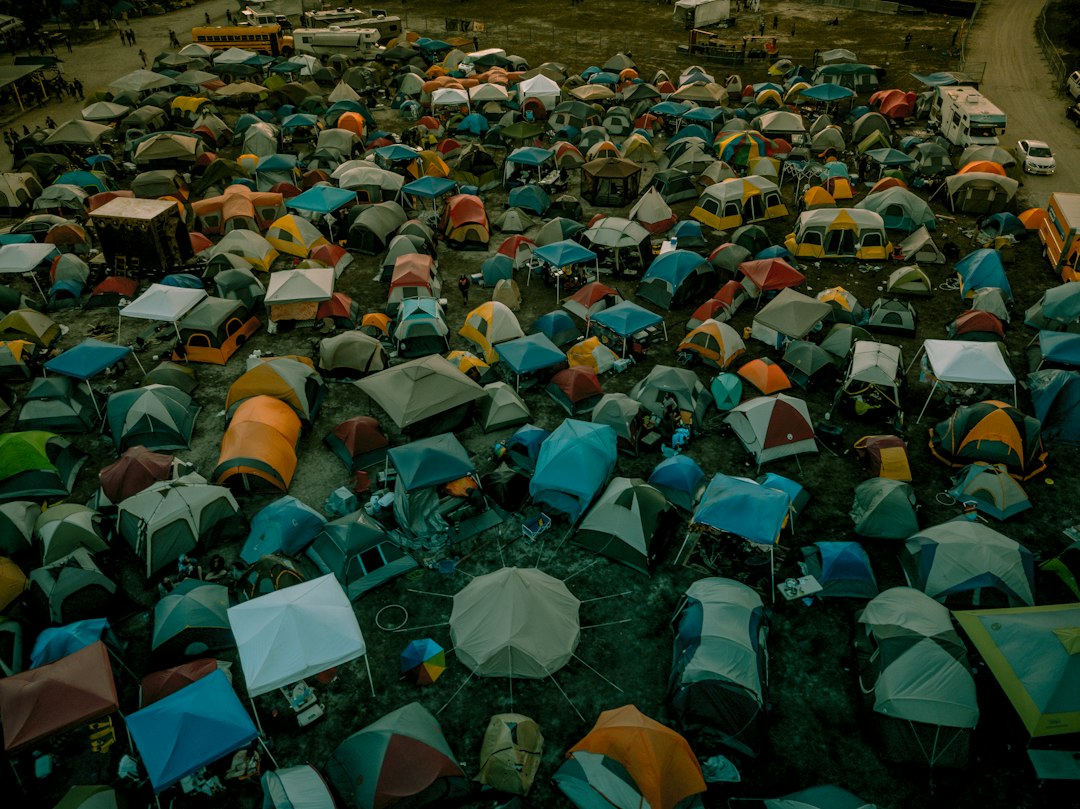
Four people in Gaza, three of them children, have been killed in a winter storm that inundated the tent encampments where hundreds of thousands of displaced Palestinians are living, according to reporting aggregated by Google News from Gaza. Families spent the storm bailing floodwater out of their shelters by hand — water fouled with raw sewage from a sanitation system that no longer functions.
The detail that should stop Atlanta readers cold is not the wind or the rain. It is the bailing. The image is of parents scooping contaminated water out of a tent with buckets and cooking pots because there is nowhere else for their family to go and nothing else to do. The deaths of three children in a rainstorm are not a natural disaster in the ordinary sense. They are the predictable consequence of a population being pushed into canvas shelters on open ground, stripped of drainage, plumbing, and the power to pump waste away.
Under international humanitarian law, an occupying power bears obligations toward the civilian population under its control — including the provision of food, medical supplies, and public health infrastructure. Human rights organizations including the United Nations, Amnesty International, and Human Rights Watch have documented for months the collapse of Gaza's water and sanitation systems and the mass displacement of civilians into makeshift camps. A storm that kills children in those camps is the humanitarian cost of that collapse arriving on a specific Tuesday, with specific names attached.
**Why this lands in Atlanta**
Atlanta is the global headquarters of the Centers for Disease Control and Prevention, and the epidemiological science of what happens next is not in dispute anywhere in this city. Sewage-contaminated standing water in a densely packed settlement without clean drinking water, soap, or functioning latrines is the textbook setup for cholera, hepatitis A, typhoid, and the acute watery diarrhea that kills small children faster than it kills anyone else. Public health researchers at Emory's Rollins School of Public Health and the hydrologists who study Atlanta's own combined-sewer legacy could sketch the transmission curve on a napkin. The difference is that when Atlanta's sewers overflowed into the Chattahoochee and Proctor Creek, residents here had a federal consent decree, a multibillion-dollar remediation program, and the legal standing to demand both. Gaza's displaced have buckets.
This city also knows something about who absorbs a flood. Atlanta's own storm-drainage failures have never fallen evenly — they concentrate in the neighborhoods with the least political power and the oldest infrastructure, a pattern residents of Peoplestown and English Avenue have testified to at City Hall for years. The principle scales. Weather does not discriminate; the built environment does, and the built environment is a product of decisions made by people who can be named and held accountable.
**The accountability question**
Georgia's congressional delegation votes on the military aid and the diplomatic cover that shape conditions in Gaza, and Georgians pay for both. That makes the sanitation of a tent camp in Gaza a matter within this state's democratic reach, not a distant tragedy. Atlanta's Palestinian American community, its Muslim and Jewish congregations working on humanitarian relief, and the city's long institutional memory of nonviolent moral pressure — housed a few blocks apart on Auburn Avenue and at the Carter Center — have all pressed the same point: humanitarian access is not charity. Under the Geneva Conventions it is a legal obligation, and obstructing it is a violation subject to investigation.
The immediate need in Gaza is unglamorous and concrete: tents replaced with weatherproof shelter, drainage, fuel to run pumps, chlorine, and unimpeded entry for the aid agencies that can deliver all four. Every day that access is restricted, the next storm is already forming.
Three children died in the rain. The water that killed them was carrying the waste of a city that was not allowed to keep its sewers running.
*Originally reported by Google News — Gaza. AtlantaStar has not independently verified the casualty figures and will update as human rights monitors publish confirmed counts.*