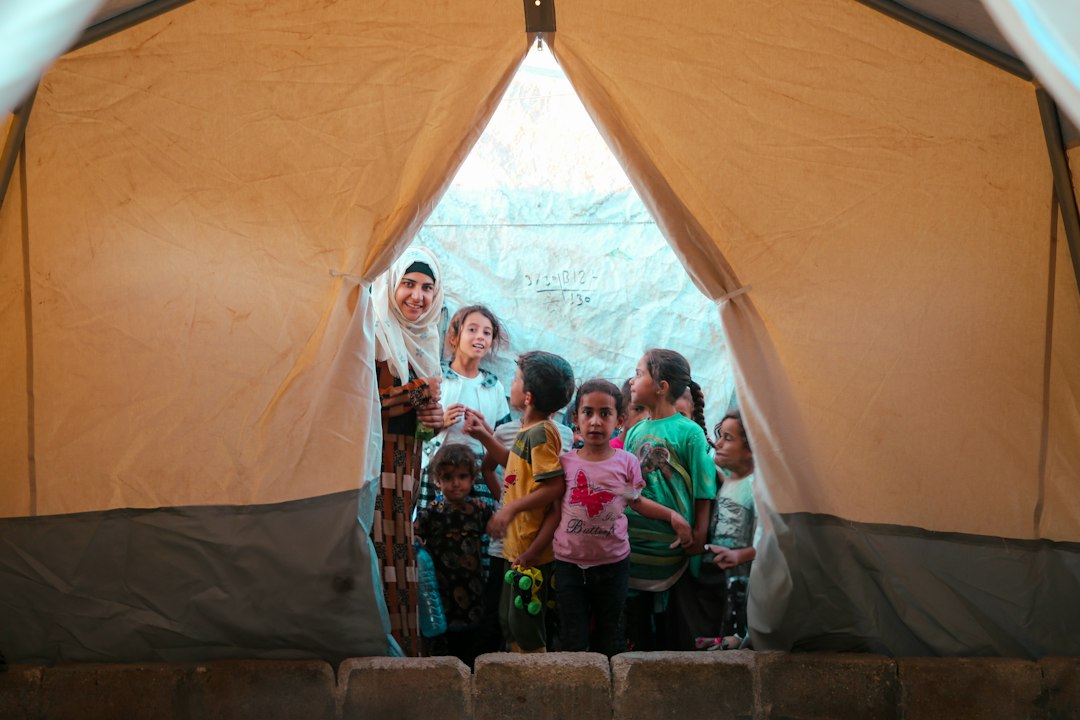
Winter has arrived in Gaza, and with it the rains. According to Save the Children, the storms are flooding the tents and improvised shelters where hundreds of thousands of displaced families are living — and Israeli restrictions on the entry of shelter materials have left more than half a million children without safe shelter against the weather.
The organization's assessment, reported this week, ties two conditions together: a seasonal weather pattern that was entirely predictable, and a set of restrictions on what may cross into the territory. One is a matter of climate. The other is a matter of policy, and therefore a matter of accountability.
That distinction is the center of the humanitarian argument. Flooding in a displacement camp is not simply bad luck when the tarpaulins, timber, tent poles and waterproofing needed to prevent it are sitting outside the crossings. Save the Children frames the shortfall as a consequence of access restrictions rather than of scarcity — a claim that places the question squarely within international humanitarian law, which obliges parties to an armed conflict to allow and facilitate the rapid and unimpeded passage of relief for civilians in need, and which places particular affirmative duties on an occupying power regarding the welfare of a population under its control.
Children are the population most exposed. Roughly half of Gaza's residents are under 18, a demographic reality that means any failure of shelter policy lands disproportionately on minors. Save the Children's figure — over 500,000 children — describes a cohort larger than the entire population of the city of Atlanta, sleeping in structures that the organization says cannot keep out standing water.
Atlanta has an unusually direct line of sight into crises of this kind. CARE USA, one of the world's largest humanitarian relief organizations, is headquartered downtown, and the Carter Center on Freedom Parkway has spent four decades building a practice around conflict mediation, election observation and the premise that civilian protection is a measurable obligation rather than a sentiment. The city is also home to Palestinian, Arab American, Jewish and interfaith communities whose members have spent two years following developments in Gaza through family connections rather than news alerts.
There is a local register to flooding, too. Atlantans know what happens when water has nowhere to go — the 2009 floods, the recurring inundation of neighborhoods along Peachtree and Proctor creeks, the long municipal fight over stormwater infrastructure in historically underinvested parts of the city. Those episodes produced a familiar civic lesson: flood damage is rarely only about rainfall. It is about who has drainage, who has materials, who has a roof rated for weather, and who has been left without.
In Gaza, according to the Save the Children report, that last category now includes a majority of the territory's children.
The policy question reaches Georgia as well. Georgia's congressional delegation votes on U.S. security assistance and on the diplomatic posture that accompanies it, and constituents across the Atlanta metro have pressed members on both sides of the aisle over humanitarian access in Gaza. Appeals from relief organizations are, in practical terms, appeals to governments with leverage over which trucks are permitted to cross — a list on which the United States sits near the top.
Save the Children's call, consistent with its public positioning throughout the conflict, is for restrictions on shelter materials to be lifted and for aid to enter at the scale the season requires. Humanitarian organizations have repeatedly made clear that the technical capacity to shelter displaced families exists; what is contested is permission.
AtlantaStar could not independently verify conditions inside Gaza, where access for international journalists remains severely limited — a constraint that has itself drawn sustained criticism from press freedom organizations and that makes documentation by humanitarian agencies, UN bodies and Palestinian journalists on the ground the primary available record.
What is not in dispute is the calendar. The rains will continue through the winter months. The materials needed to withstand them are either admitted or they are not, and that decision will be made well before the next storm.
Originally reported by Google News — Gaza.