
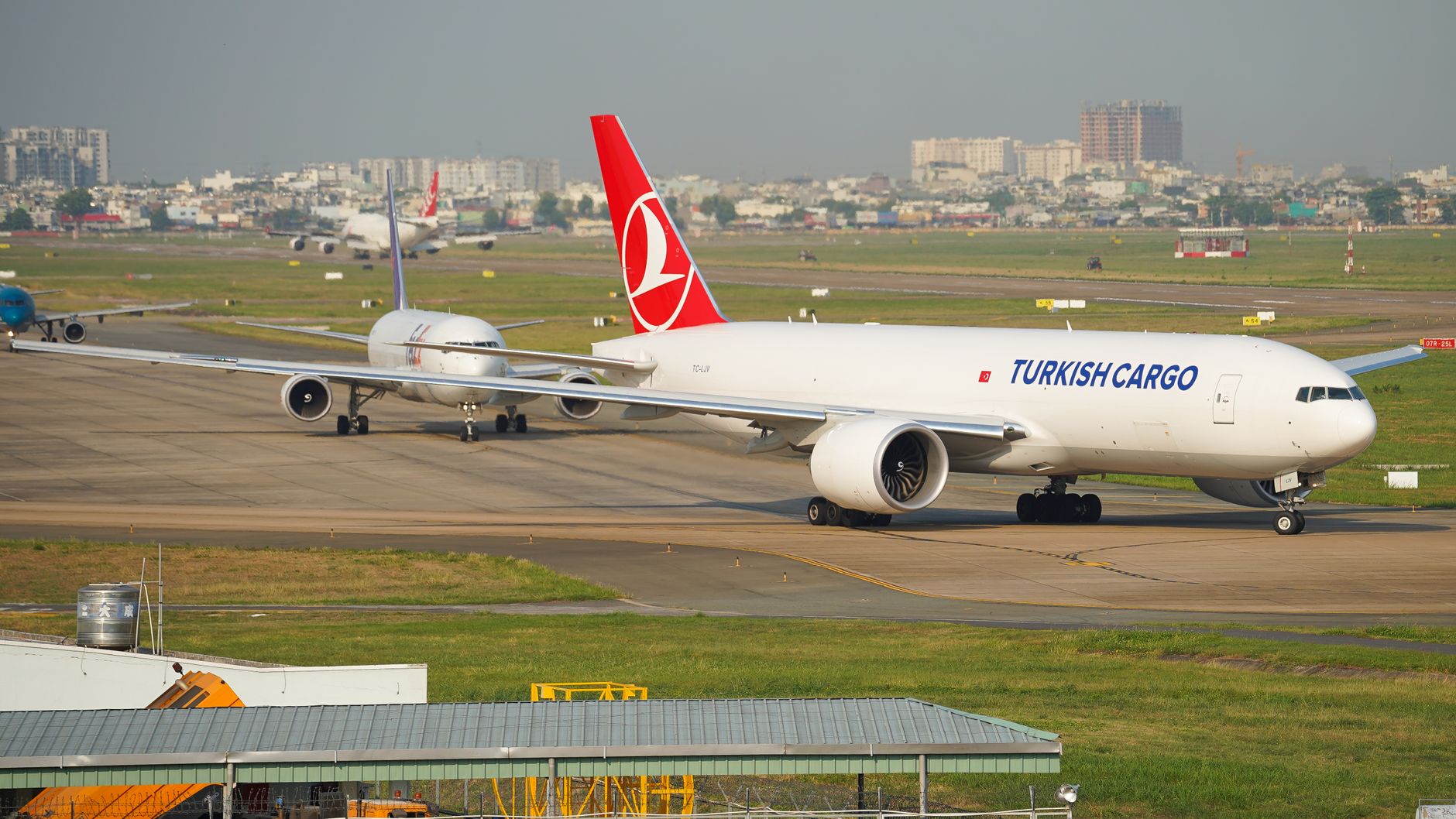
Federal aviation regulators have waived emissions requirements to allow Boeing to sell 35 additional 777F freighter aircraft, a decision that could ripple through air cargo operations serving Atlanta.
For Hartsfield-Jackson Atlanta International Airport, one of the busiest cargo hubs in the United States, the ruling may open the door for more fuel-efficient freighters to move goods through the region. Atlanta's logistics and distribution network, already a backbone of the metro economy, depends heavily on air freight capacity.
The Federal Aviation Administration's move, reported by Reuters, clears a regulatory obstacle for Boeing's 777F program. The waiver applies to emissions rules that otherwise would have limited the sale of these additional aircraft.
Though the report did not specify which airlines or cargo carriers would purchase the freighters, Atlanta-based operations and carriers serving ATL could be among those watching the decision closely. Boeing has long supplied aircraft to cargo operators that fly into and out of Atlanta.
At Hartsfield-Jackson, cargo operations have grown steadily, with freighter aircraft moving everything from automotive parts to pharmaceuticals. The airport's location near interstates and rail lines makes it a key transfer point for high-value cargo. A larger pool of Boeing 777F freighters could reinforce that role.
The Boeing 777F is a long-range, twin-engine freighter designed for high-capacity routes. While the FAA waiver does not guarantee any immediate Atlanta route changes, it removes a barrier that could otherwise slow Boeing's delivery schedule for carriers that serve the region.
Atlanta's air cargo ecosystem includes major integrators, freight forwarders, and maintenance providers. New freighter availability often spurs network adjustments, and Atlanta's central position in the U.S. could make it a candidate for expanded flights.
The FAA decision comes as global supply chains continue to adjust to shifting trade patterns. With e-commerce and just-in-time logistics driving demand for air freight, regulatory actions that affect freighter supply can have outsized effects on hubs like Atlanta.
For now, the immediate effect of the waiver is limited to Boeing's ability to sell 35 additional 777F aircraft. But Atlanta's airport and its surrounding logistics industry will likely monitor how those sales translate into route networks, fleet deployments, and cargo capacity in the months ahead.
Originally reported by Google News — Reuters. Source: https://news.google.com/rss/articles/CBMi1AFBVV95cUxOeTQ4a2JORTVZMVR1UjdwZXpsc1hvYWZqbk90aWtUc3pVRVNfbHFlbWkxLTRheTNKVkl2REdGalZvLWVVRlhJUHZfWElGT2poY3JjRW41QmwwWHVaT0RsdDNoZTZkdGM1eDJyczlIenNQNk5qSXZxWWVIU2JpX0FKQVNhbXRxWHNVVmJXVUx0U1hfLUUxTUtyRnJoNTViMjRZVXJBSWlZNWc1T0hsTWs2Ul95akxuMEdiS1hjVDlQRFNYNDNzS0Z0MzNjMVpLOEU5Y1lUdw?oc=5