
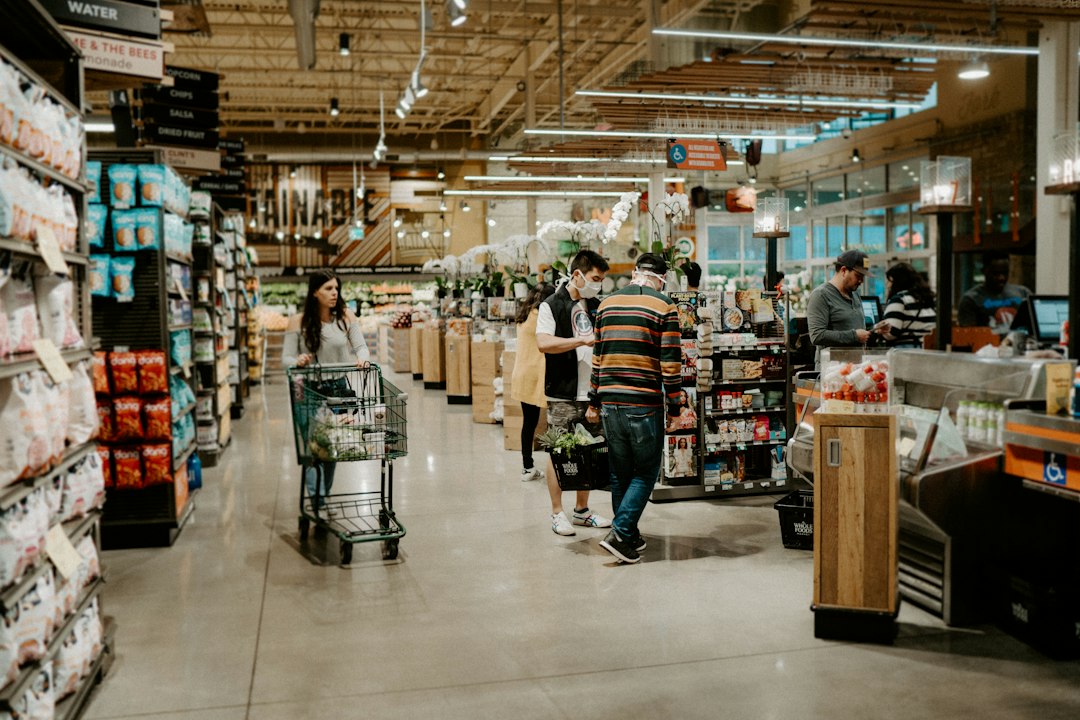
The European Union is pressing member states to mount a coordinated response after supermarket operators in Germany, Romania and the United Kingdom reported cyberattacks, incidents that EU officials say are part of a broader pattern now touching at least 11 countries.
European authorities characterized the intrusions as "not isolated," language that signals officials believe the attacks are connected rather than a coincidental cluster of separate breaches. The EU has urged action across the bloc, though officials have not publicly identified who is responsible.
At least one national assessment points away from the most alarming explanation. A Romanian official said they suspect no state actor was behind the attack reported there — a judgment that, if it holds, would place the incidents in the category of criminal or opportunistic hacking rather than government-directed sabotage. That distinction matters for how governments respond: state-linked attacks invite diplomatic and intelligence countermeasures, while criminal campaigns are typically handled through law enforcement and industry-wide security hardening.
Many details remain unreported. The scale of disruption at individual chains, the method of intrusion, whether customer data was exposed, and the identity of the attackers have not been made public in the account of the EU's warning. No incidents in the United States were reported as part of this cluster, and none have been reported in Georgia.
**Why Atlanta should be watching**
The warning arrives in a region where groceries are not a side business but a central pillar of the economy. Metro Atlanta is one of the Southeast's primary distribution and logistics corridors, with warehousing, cold-chain freight and regional supply networks feeding stores across Georgia and neighboring states. Chains including Publix, Kroger and Aldi operate dense store footprints across the metro area, and the region's freight infrastructure moves goods inland from Georgia's ports and through Hartsfield-Jackson's air cargo operations.
That concentration is exactly what makes the European incidents worth attention here. Modern supermarkets run on networked systems — point-of-sale terminals, payment processing, inventory and replenishment software, warehouse management platforms and logistics scheduling. A disruption in any one of those layers does not simply inconvenience a company's IT department; it can empty shelves, freeze checkout lanes and strand perishable inventory in transit. Grocery is a thin-margin, high-volume business, which leaves little slack when systems go dark.
The burden of such an outage is not distributed evenly. Shoppers who can absorb a disrupted trip — drive to another store, order delivery, keep a well-stocked pantry — are inconvenienced. Households on tight budgets, those relying on public transit, seniors, and families using SNAP benefits at a specific nearby store face a harder problem when a single neighborhood grocer's registers stop working. In parts of Atlanta already underserved by full-service supermarkets, the loss of one store's operations for even a day is not an abstraction.
Front-line grocery workers absorb the other half of the cost. Cashiers, stockers and delivery drivers are the ones who manage frustrated customers, work manual workarounds and often lose scheduled hours when a store cannot operate normally — rarely with hazard pay or guaranteed compensation for the disruption.
**An open question for U.S. regulators**
The EU's framing — that these attacks are connected and demand a collective response — implicitly challenges the idea that cybersecurity in the retail food sector is purely a private matter for individual companies. Food distribution is critical infrastructure in practice, even where it is not always treated as such in policy. Whether American regulators, including those overseeing Georgia's substantial grocery and logistics industry, draw the same conclusion from Europe's experience remains to be seen.
For now, the European investigations are ongoing, and officials have offered no timeline for attribution or for the coordinated action the EU is calling for.
*Originally reported by Al Jazeera — All News.*