
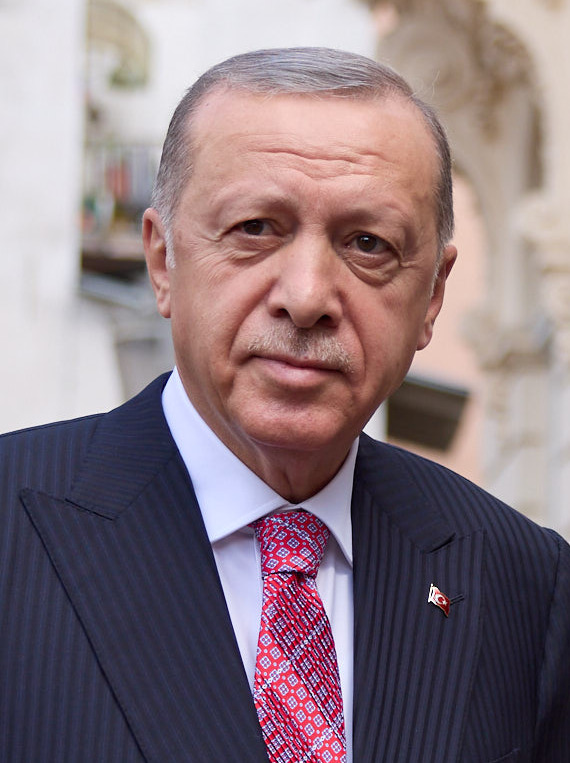
Turkish President Recep Tayyip Erdogan has publicly rejected a recent Israeli move concerning recognition of the Armenian genocide, dismissing it as political opportunism and turning attention instead to the deaths of Palestinians in Gaza, the Associated Press reported.
The remarks add to a steep decline in relations between Turkey and Israel, two former partners whose ties have frayed sharply over Israel's war in Gaza. Erdogan has been among the most outspoken world leaders condemning that campaign, and his latest comments cast the Israeli gesture toward Armenians as inconsistent with its own conduct.
The Armenian genocide refers to the systematic killing and forced deportation of an estimated 1.5 million Armenians by the Ottoman Empire during and after World War I. More than 30 countries, numerous historians, and the United States — which issued formal recognition in 2021 — classify the events as genocide. Turkey, the Ottoman Empire's successor state, rejects that characterization, and the issue remains one of the most sensitive matters in Turkish foreign policy.
Israel has historically stopped short of formally recognizing the Armenian genocide, a position long attributed to its strategic relationships with Turkey and Azerbaijan. Any shift in that stance carries diplomatic weight, and Erdogan's rebuttal signals that Ankara views the move less as a moral reckoning than as a diplomatic jab amid worsening bilateral tensions.
By invoking Gaza, Erdogan tied the dispute to the humanitarian crisis that has unfolded there. Israel's military campaign, launched after the Hamas-led attack of October 2023, has killed tens of thousands of Palestinians according to health authorities in the territory, and has drawn scrutiny from the United Nations, the International Court of Justice, and human rights organizations examining allegations of war crimes and violations of international humanitarian law. Israel maintains that it acts in self-defense and disputes those allegations.
The framing Erdogan chose — that recognition of past atrocities cannot be divorced from accountability for present ones — reflects a broader argument advanced by human rights advocates, who contend that the machinery of international law must be applied consistently rather than selectively.
Metro Atlanta is home to a small but active Armenian American community, part of a diaspora that has spent generations pressing for broader recognition of the 1915 atrocities. For those families, the politics of recognition are deeply personal, and the sight of the genocide being wielded as a diplomatic bargaining chip is a familiar frustration. Atlanta is also home to a substantial Muslim and Middle Eastern population, including Palestinian and Turkish residents, for whom developments in Gaza and the wider region carry immediate weight.
When Congress moved to recognize the Armenian genocide through resolutions in 2019 and President Joe Biden's declaration in 2021, the measures drew broad bipartisan support. Advocacy groups across Georgia have continued to press for human rights accountability abroad, and the intersection of those causes — genocide recognition and the humanitarian toll in Gaza — mirrors debates playing out in Atlanta community centers, houses of worship, and on university campuses.
The AP report gave no indication that the rift between Ankara and Jerusalem would be resolved soon. For now, Erdogan's message was pointed: that a country cannot claim the moral authority to name a century-old genocide while facing accusations of atrocities of its own.
Originally reported by Google News — AP Wire.