
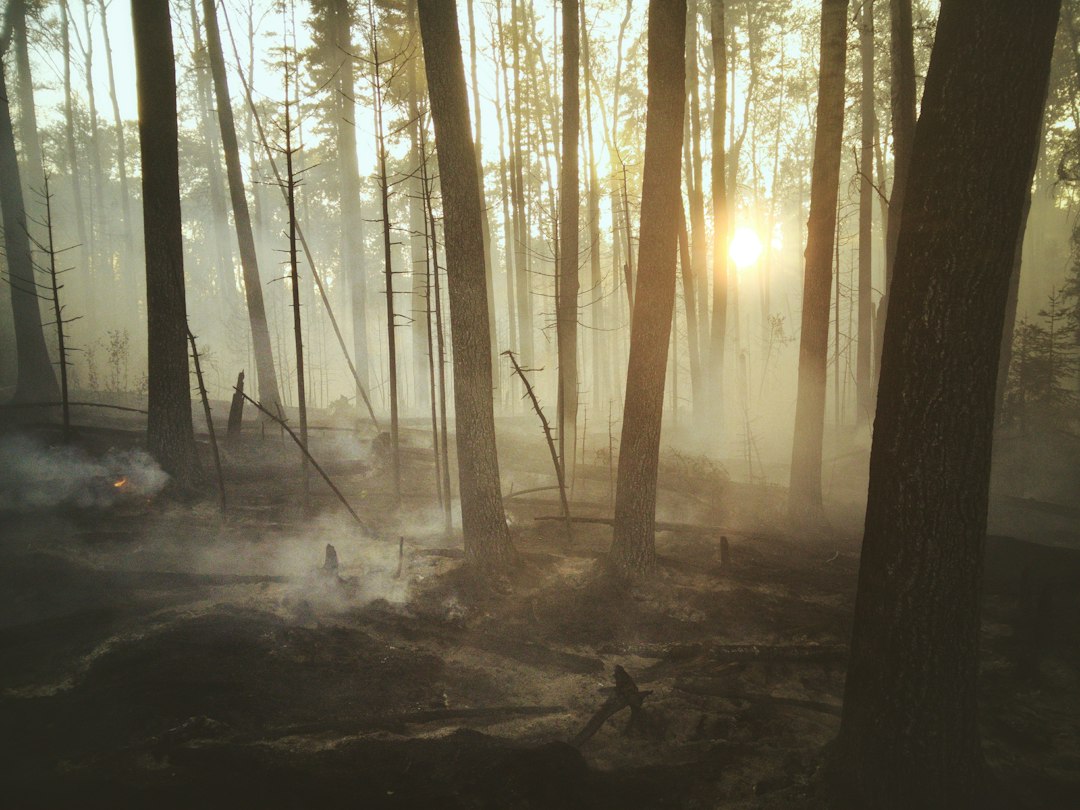
A run of dry weather has left Georgia facing heightened wildfire danger, CBS News reported this week — a warning that lands differently in a state where swamp, pine forest and fast-growing suburbs increasingly share the same map.
The mechanics are straightforward. When rainfall falls short for weeks at a time, the layer of leaves, pine straw and downed limbs that covers much of Georgia's landscape dries out. Low humidity pulls moisture from that fuel faster, and wind does the rest. A fire that would smolder and die in a wet November can instead move across acres of woodland in an afternoon.
What has changed is not that Georgia burns. It always has. Fire is native to the longleaf pine systems that once stretched across the Coastal Plain, and the state's forestry agencies have long used controlled burning as a management tool. What has changed is the backdrop: a warmer atmosphere that evaporates moisture from soil and vegetation more aggressively, rainfall that arrives in heavier but less frequent bursts, and a dry-spell pattern that can turn an ordinary autumn into a dangerous one.
That combination is the local face of a global problem. Climate change in Georgia does not announce itself only through hurricanes pushing water into Savannah's streets or heat that stresses peach and pecan crops in the middle of the state. It also shows up as this — a quiet, undramatic absence of rain that steadily raises the odds of a bad fire week.
Georgia has seen what the upper end of that risk looks like. Large fires in and around the Okefenokee Swamp have burned across vast stretches of southeast Georgia in past drought years, sending smoke plumes far beyond the fire line and degrading air quality in communities that never saw a flame. Drought is the common thread in those events, and drought is precisely what a hotter climate makes more intense when it does arrive.
For Atlanta, the exposure is less about the wildland fire itself than about smoke and sprawl. The metro region's air quality is already pressured by traffic and summer ozone; wildfire smoke, whether from south Georgia, north Georgia's mountains or beyond state lines, adds a layer of fine particulate pollution that is hardest on children, older residents, outdoor workers and people with asthma. Those burdens do not fall evenly. Neighborhoods with less tree canopy, older housing stock and fewer cooling and filtration options absorb more of the harm.
Sprawl matters too. Decades of development have pushed subdivisions into what fire managers call the wildland-urban interface — the seam where houses meet woods. Every new cul-de-sac carved into pine forest in the exurban counties ringing Atlanta puts more structures, and more ignition sources, inside the fire environment.
The practical response is unglamorous and mostly local. Residents can honor burn restrictions and check permit requirements with the Georgia Forestry Commission before burning debris, since human activity accounts for the bulk of wildfire ignitions in the Southeast. Homeowners in wooded areas can clear gutters and roofs, move firewood away from siding and maintain defensible space. Local governments can fund fire departments adequately, keep prescribed-burn programs running and write development rules that account for fire risk rather than ignoring it.
The longer-term response is the energy transition — the only thing that addresses the underlying driver rather than the symptom. Georgia's rapid build-out of solar generation and electric-vehicle manufacturing is part of that work, though the state's climate trajectory will be set by how quickly emissions fall nationally and globally.
For now, the message from the forecast is simpler: the woods are dry, and they will stay that way until meaningful rain arrives. Until then, caution is the cheapest form of fire protection Georgia has.
Originally reported by Google News — Atlanta.