
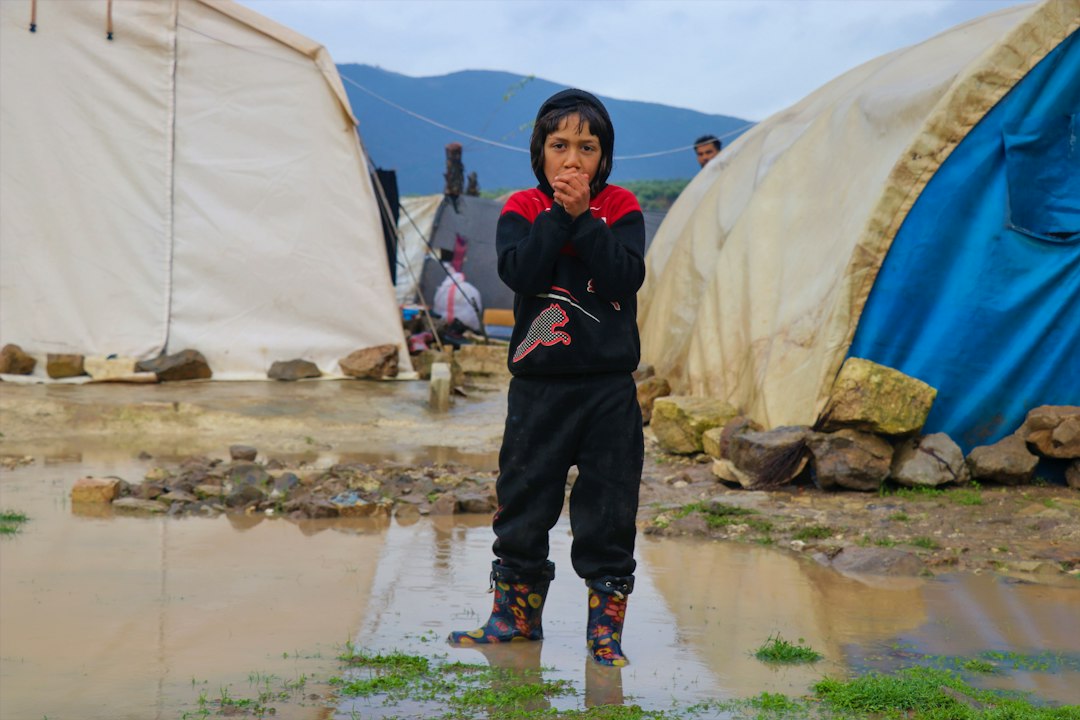
Children are among those who have died as heavy rains flooded tents and makeshift shelters across the Gaza Strip, according to UN News, the United Nations' in-house news service — a grim marker of how the collapse of housing in the territory has turned ordinary winter weather into a cause of death.
The UN report describes floodwaters inundating tents and shelters where displaced Palestinians have been living. It identifies children among the dead. The full tally of casualties, and the specific locations where the deaths occurred, were not detailed in the summary available to AtlantaStar at the time of publication.
That sparseness is itself part of the story. Reporting from Gaza remains severely constrained, and the UN's own agencies have repeatedly been among the only bodies able to document conditions inside the territory at scale. When a storm kills children in their beds, the fact that the world learns about it through a UN bulletin rather than a dispatch from the scene reflects how thoroughly access has narrowed.
**Why rain kills**
A rainstorm is not, in ordinary circumstances, a mass-casualty event. It becomes one when an entire population has been moved out of buildings and into fabric.
The tents and improvised shelters now housing much of Gaza's population are not the product of a natural disaster. They are the product of displacement — the repeated, often forced movement of civilians away from their homes, and the destruction of the housing stock they left behind. International humanitarian law obligates an occupying power to provide for the basic needs of a civilian population under its control, including shelter. Deaths from exposure and flooding in a displacement camp are therefore not incidental to the conduct of hostilities; they are a foreseeable consequence of it, and they raise questions of legal responsibility that human rights organizations including the United Nations, Amnesty International and Human Rights Watch have pressed throughout the conflict.
The mechanics are brutally simple. Tents pitched on low ground, on sand, or atop rubble have no drainage. Groundwater and runoff pool and rise. Bedding, clothing and the small stores of food a family has managed to keep are soaked. There is no second floor to climb to and no dry building to walk to, because the buildings are gone or unreachable. Children, smaller and less able to regulate body temperature, are the most exposed, and when water moves at night they are the least able to get clear of it.
**The Atlanta connection**
For readers in Atlanta, the distance is real but the questions are not abstract.
Georgia's congressional delegation votes on U.S. military assistance to Israel and on humanitarian appropriations, which makes the conditions in Gaza's camps a matter of constituent correspondence to offices on Capitol Hill and in district offices from Buckhead to Columbus. Atlanta is also home to Palestinian American families with relatives in Gaza and the West Bank, and to a network of churches, mosques, synagogues and student groups that have organized around the war since 2023 — meaning news of flooded shelters arrives here as personal information for some of our neighbors, not only as foreign policy.
There is a closer parallel too. Atlanta knows what happens when people without durable shelter meet bad weather. The city's warming centers, its winter emergency protocols and its long fight over unsheltered homelessness all rest on the same underlying fact the UN is reporting from Gaza: when people have nowhere solid to sleep, the weather becomes a killer, and the deaths that follow are a policy outcome rather than an act of God.
The difference is scale, and cause. Atlanta's shelter crisis is a failure of housing policy. Gaza's is the result of a war that has emptied neighborhoods and left a population in tents, where rain now does what rain does.
*Originally reported by Google News — Gaza.*