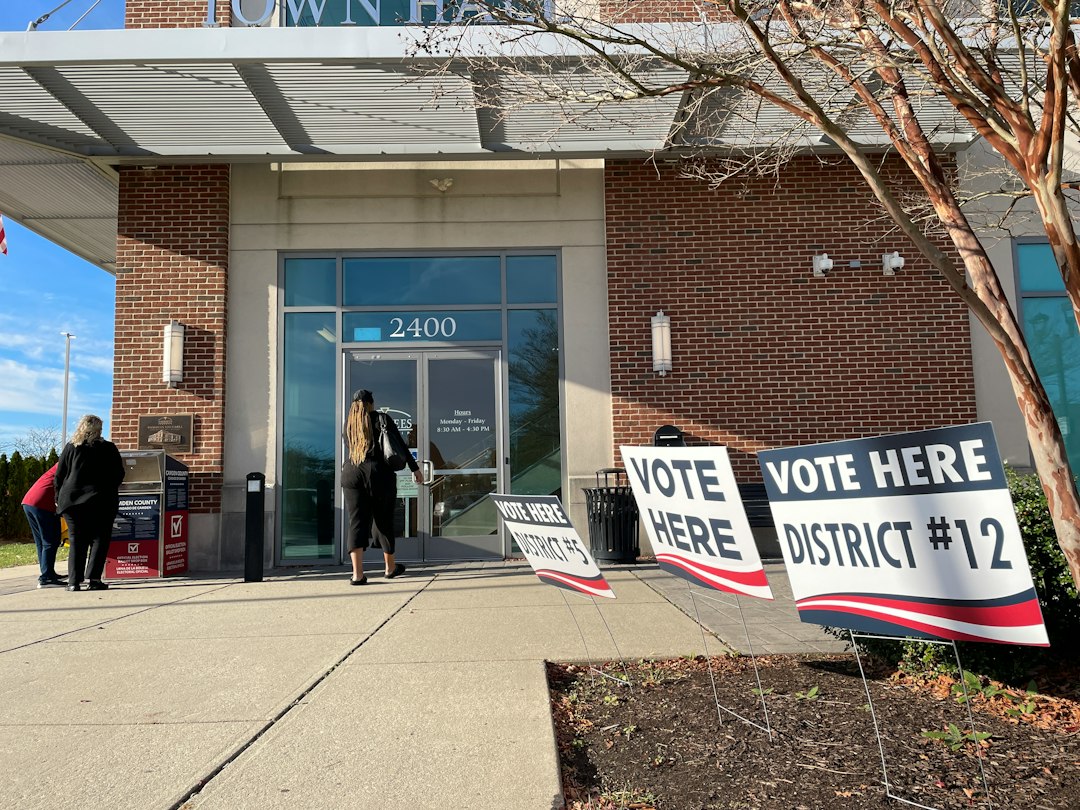
Black voters helped put Democrats over the top in Georgia. Now, according to reporting published by The Guardian, they expect something in return — and they expect to be heard before the next ballots are printed.
It is a familiar cycle for anyone who has worked a precinct in Fulton, DeKalb or Clayton County. Organizers spend months knocking doors in Southwest Atlanta, setting up tables outside Krispy Kreme on Ponce and the churches along Cascade Road, registering students at Morehouse, Spelman and Clark Atlanta. Turnout climbs. Margins shift. And then the thank-you calls stop coming.
The Guardian's reporting captures a coalition that has grown impatient with that pattern. Black voters in Georgia are not a demographic that materializes on its own. They are organized — by churches, by Divine Nine chapters, by labor, by neighborhood associations and by the civic infrastructure that Atlanta has been building since the Civil Rights Movement. That organizing is work, and the people doing it increasingly treat their support as conditional rather than guaranteed.
For Georgia Democrats, the message is a warning dressed as good news. For Republicans, it is closer to a structural problem. Statewide races here are decided at the margins — the 2020 presidential contest came down to fewer than 12,000 votes out of roughly five million cast. A party that cannot compete for metro Atlanta's Black electorate, and cannot stop the other side from mobilizing it, is a party gambling that the turnout machine breaks down on its own.
That is not a strong bet. Republicans in Georgia have spent recent cycles defending positions that poll badly in exactly the places where their statewide margins are thinnest: the state's long refusal to fully expand Medicaid, a tightened election law that drew national boycotts and corporate rebukes, and repeated fights over what can be taught in public classrooms. Each of those fights gave Atlanta organizers a reason to go back to the doors they had already knocked.
The accountability demand described in The Guardian's reporting is not primarily about party loyalty. It is about substance — whether the officials elected with Black votes move on the issues that drove those votes. In Atlanta, that list is not mysterious. It includes voting access and the mechanics of how ballots are cast and counted. It includes health coverage in a state where rural hospitals have closed and uninsured rates remain among the nation's highest. It includes housing costs that have pushed longtime residents out of neighborhoods their families built, transit that still does not reach the workers who need it most, and economic development that promises jobs on the Westside and delivers them somewhere else.
None of that is new. What may be new is the willingness to say it out loud in an election year, to candidates who need the votes.
There is a version of 2026 in which Georgia Democrats read this correctly: they campaign on material commitments, name them specifically, and treat Black voters as partners in governing rather than a turnout target to be activated in October. There is another version in which they assume the coalition holds itself together, and discover in November that enthusiasm is not a renewable resource.
Republicans, for their part, have shown little appetite for competing seriously in Atlanta's Black precincts. Their strategy has leaned on consolidating exurban and rural margins while hoping Democratic turnout sags. The reporting out of Georgia suggests the people who build that turnout are paying close attention — and that they intend to be heard either way.
The practical question for both parties is the same one Atlanta organizers have been asking for years: who is actually listening, and what did they do about it?
*Originally reported by Google News — Georgia Politics.*