
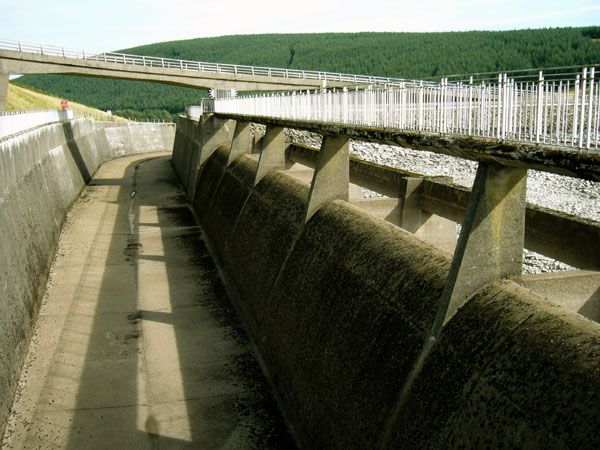
The U.S. Army Corps of Engineers plans to increase water releases from Lake Lanier as the reservoir contends with drought conditions and falling water levels, according to reporting by CBS News.
For metro Atlanta, few infrastructure decisions carry more weight. Lanier, created by Buford Dam on the Chattahoochee River, is the primary drinking water source for much of the region, and the Corps — not the state, and not local utilities — controls how much water moves through the dam and when. Every adjustment to that schedule ripples outward: to the taps of millions of residents across North Georgia, to the river corridor downstream through Cobb, Fulton and Douglas counties, and eventually to the Apalachicola-Chattahoochee-Flint basin that Georgia shares with Alabama and Florida.
Increasing releases during a dry stretch may sound counterintuitive to anyone watching docks sit higher above the waterline each week. But the Corps operates Lanier under a balancing act written into federal law and decades of litigation. The dam must support downstream water supply, water quality, hydropower generation and navigation while also holding back enough storage to get the region through a prolonged dry period. When natural inflows into the Chattahoochee fall off, more of the water that keeps the river functioning downstream has to come out of the reservoir itself — which is precisely why drought shows up on Lanier's shoreline before it shows up anywhere else.
That is the local face of climate change in Georgia. The state's warming trend does not arrive as a single catastrophe but as volatility: wetter wet years, drier dry years, and heavier rain falling in shorter bursts that run off instead of soaking in and recharging the system. Hotter summers increase evaporation from the reservoir surface and increase demand from lawns, cooling systems and farms at the same moment supply tightens. The result is a water system that is asked to absorb swings it was not designed for.
The consequences do not stop at the Hall and Forsyth county shoreline. South Georgia's farm economy — peanuts, cotton, pecans, vegetables — depends on the Flint River basin and the aquifers beneath it, and the same drought signals that drain Lanier squeeze irrigation downstate. On the coast, the climate story inverts: Savannah, Brunswick and the barrier islands face rising seas, saltwater intrusion into freshwater supplies and tidal flooding that no longer requires a storm. Georgia is being pressured at both ends of the same water cycle.
Atlanta's exposure is compounded by geography. Unlike river cities built at the fall line or on major navigable waterways, Atlanta sits near the headwaters of the Chattahoochee, drawing from a watershed that is small relative to the population depending on it. That structural thinness is what made the tri-state water wars a generation-long legal fight, and it is what makes each drought cycle a test of whether the region's conservation gains hold.
Those gains are real and worth defending. Metro Atlanta's water providers have spent years on leak detection, metering, tiered pricing, outdoor watering rules and reuse — the kind of unglamorous demand-side work that lets a growing region use water more carefully rather than simply pumping more of it. Climate adaptation here looks less like a single megaproject and more like compounding efficiency, paired with an energy transition that matters for water too: thermoelectric power generation is among the state's largest water users, so every solar panel and every efficiency upgrade on Georgia Power's system reduces draw on the same stressed rivers.
What residents should watch in the weeks ahead is straightforward: whether the Corps' revised release schedule is paired with clear public communication about lake levels, whether local watering restrictions follow, and whether state leaders treat this as a routine dry spell or as the recurring condition it increasingly resembles. Lanier has been Atlanta's buffer against drought for more than half a century. The open question is how much buffer a hotter Georgia leaves it.
Originally reported by Google News — Atlanta.