
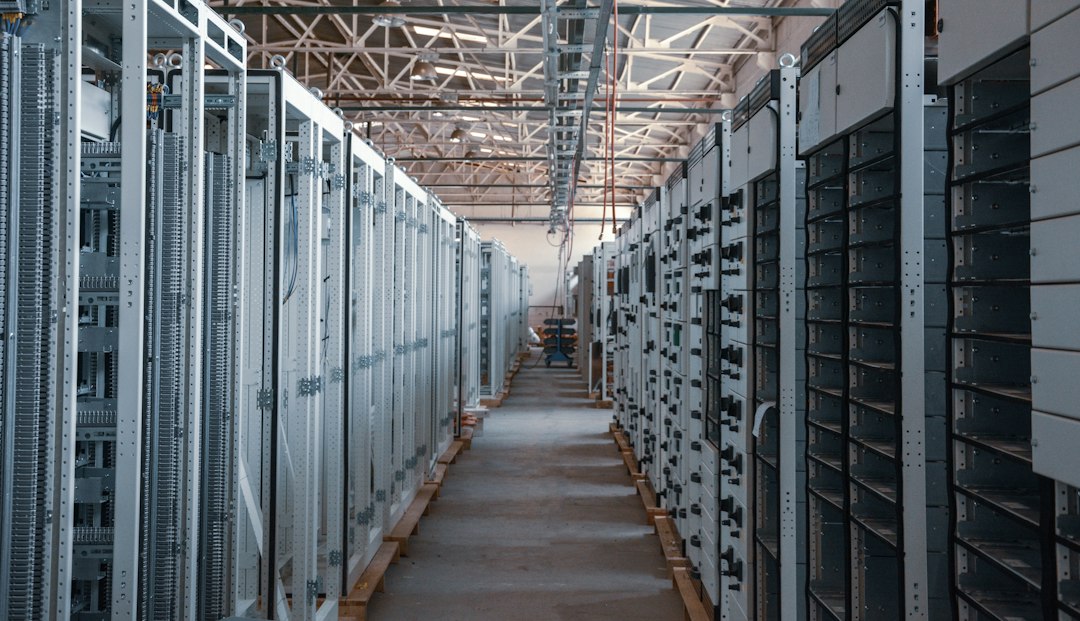
The artificial intelligence buildout has reached a scale that outstrips the world's capacity to pay for it, according to an analysis published by The Washington Post under the headline "There's not enough money in the world to pay for the AI boom."
The argument is blunt: the computing infrastructure that AI companies say they need — the chips, the server halls, the electricity, the water, the transmission lines — carries a cumulative price tag that exceeds the pools of capital realistically available to fund it. That framing cuts against the prevailing mood in technology finance, where announcements of ever-larger data center investments have become routine and are generally received as evidence of strength rather than strain.
For readers in metro Atlanta, this is not an abstract debate about Silicon Valley balance sheets. Georgia has spent the past several years positioning itself as one of the country's preferred destinations for large-scale data center development, competing with northern Virginia, Texas and Arizona for projects that promise capital investment and tax base in exchange for land, power and favorable treatment. Local governments across the region have weighed rezonings and incentive packages for facilities whose economics depend on exactly the kind of sustained, nearly unlimited financing The Post's analysis questions.
That dependency is the part worth sitting with. A data center campus is a long-lived, capital-intensive asset built on the assumption that demand for computing will keep climbing and that someone will keep writing checks. If the financing environment tightens — if lenders, pension funds, sovereign wealth funds and the handful of technology companies underwriting most of this construction decide the returns no longer justify the outlay — the exposure does not stay in New York or San Francisco. It shows up in half-finished sites, in revised job projections, in utility plans built around load that never materializes, and in county budgets that were drawn assuming it would.
The electricity question is the sharpest local version of this. Data centers consume power at a scale that reshapes utility planning, and the cost of new generation and transmission is ultimately socialized through the ratemaking process unless regulators structure it otherwise. Georgia has already spent considerable public attention on how large new electricity customers should be charged for the infrastructure they require. A capital crunch in the AI sector would not relieve that pressure so much as complicate it: utilities commit to multi-decade assets on the strength of demand forecasts, and forecasts built on an unsustainable boom are a poor foundation for ratepayer-funded construction.
There is also a straightforward labor and development angle. The construction phase of a data center generates substantial short-term employment; the operating phase generally does not, relative to the footprint and the power draw. Communities that have accepted that trade have done so partly on the promise of long-term stability. Financing that proves more fragile than advertised changes what that promise is worth.
None of this requires believing the AI boom will collapse. The more useful reading of The Post's analysis is as a question about arithmetic rather than a prediction of failure: at some point, stated ambitions have to be reconciled with the money that actually exists. Where that reconciliation happens — in scaled-back projects, in higher borrowing costs, in consolidation among the companies that can still afford to build — determines who absorbs the difference.
For Atlanta and the counties around it, the practical implication is about posture. Incentive agreements, power contracts and zoning conditions negotiated during a period of apparently limitless capital should be read as documents that will also have to work in a period when capital is scarce. Local officials have leverage now that they may not have later, and the terms written today are the ones communities will live with if the arithmetic tightens.
Originally reported by Google News — World.