
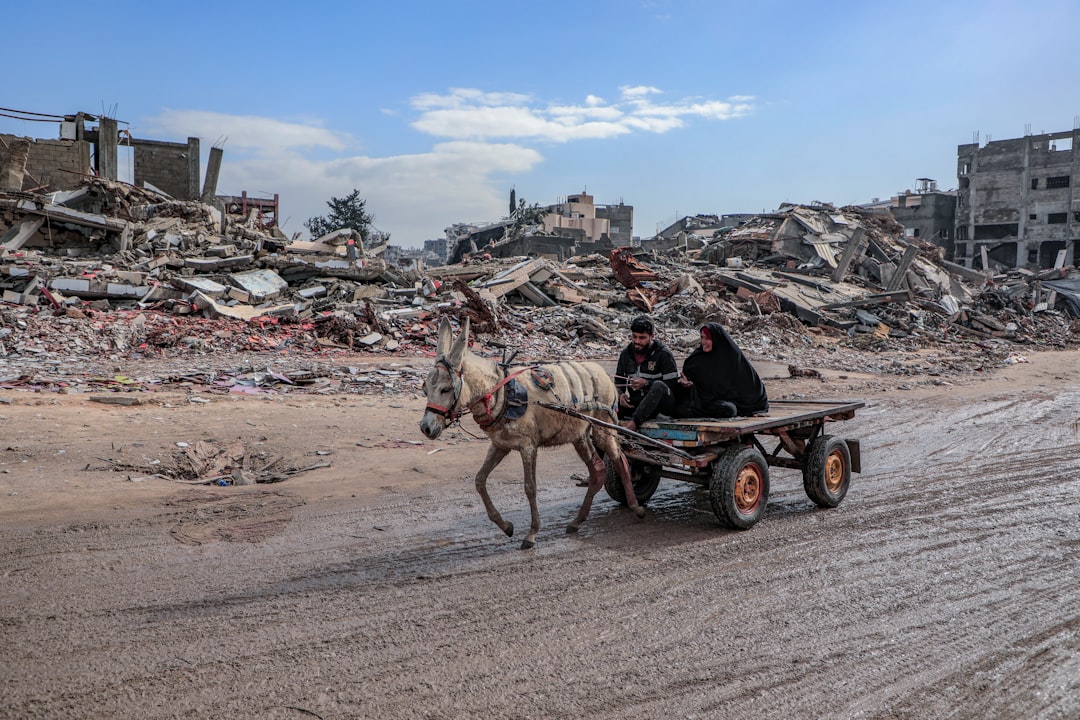
A newly released United Nations report has documented what it describes as the "overwhelming" scale of children killed in Gaza, findings that legal scholars say raise grave questions about violations of international humanitarian law.
The report, the subject of analysis published by The Conversation, focuses on the toll the war has taken on the youngest residents of the besieged territory. According to the UN's findings, the number of children killed reflects a pattern serious enough to demand legal scrutiny — including questions about whether the conduct of the war meets the threshold for war crimes under the frameworks that govern armed conflict.
International humanitarian law, rooted in the Geneva Conventions and decades of customary practice, obligates all parties to a conflict to distinguish between combatants and civilians and to take every feasible precaution to spare children, who are afforded special protection. When the death toll among civilians — and especially among children — reaches the scale the UN describes as "overwhelming," legal analysts argue, it shifts the burden of explanation onto those waging the war and invites investigation by international accountability bodies.
The legal questions raised are not abstract. They touch on the jurisdiction of international courts, the responsibilities of states that supply weapons and diplomatic cover, and the obligations of the broader international community to prevent and punish grave breaches of the laws of war. The UN report adds to a growing body of documentation compiled by human rights organizations seeking to establish an evidentiary record of what has unfolded in Gaza.
**An Atlanta connection**
While the war is being fought thousands of miles away, its reverberations are felt acutely in Atlanta, home to one of the South's most established Palestinian and Arab American communities and a wide network of interfaith, civil rights, and humanitarian organizations. Since the conflict escalated, advocates across metro Atlanta have organized vigils, fundraising drives for medical relief, and calls for accountability, framing the crisis as both a humanitarian emergency and a question of international law.
Atlanta's identity as a global hub for human rights — the city of Martin Luther King Jr. and the home of The Carter Center, which has long worked on conflict resolution and election monitoring in the region — gives the UN's findings particular resonance here. For many in the city's faith communities and on its university campuses, reports documenting the deaths of children have become a focal point for demands that elected officials, including members of Georgia's congressional delegation, weigh U.S. policy against the standards of international law.
**Why accountability matters**
Human rights groups including the United Nations' own monitoring bodies have repeatedly emphasized that documentation is the first step toward accountability. Establishing a credible record of civilian and child casualties is essential to any future legal process, whether before international tribunals or through domestic mechanisms in countries that recognize universal jurisdiction over war crimes.
The report's framing of the child death toll as "overwhelming" signals that, in the assessment of UN investigators, the scale of harm has moved beyond the incidental losses that international law tolerates in legitimate military operations. That distinction — between lawful collateral damage and unlawful targeting or indiscriminate force — sits at the heart of the legal questions the report raises.
For readers in Atlanta following the conflict, the UN's findings underscore a persistent theme in the international response: that the protection of children in war is among the most basic obligations under international law, and that its apparent breach demands not only humanitarian aid but a credible path to accountability.
The full scope of the UN's findings, and the legal analysis they have prompted, was detailed in reporting published by The Conversation.
*Originally reported by Google News — Gaza.*